
Comparison
Paper, PLA or bacterial cellulose?
If you want to move away from plastic medicine cups, you will come across three materials. They look alike but behave very differently. Here we set them side by side, honestly.
The short answer
Updated 10 October 2026.
A paper medicine cup is made of paper, but it often needs a lining to be watertight. That lining is often plastic. PLA is a bioplastic. It comes from plants, but it is still a plastic. Bacterial cellulose is neither a plastic nor paper. It is cellulose that bacteria grow as a sheet.
None of the three is best at everything. Which material fits depends on what you use it for and where it goes after use. For the medication round in hospitals and care homes, three questions matter most. Does the cup hold liquid? Does it contain plastic or PFAS? And what happens to it after use?
Paper medicine cups
Paper is made of cellulose fibres from wood. It is strong as long as it stays dry. Wet paper goes limp and leaks. That is why paper cups for liquids get an inner lining. Often that is a thin layer of polyethylene (PE), the same kind of plastic as in plastic bags.
Paper disposable cups often have a plastic coating to make them watertight. Under EU rules that makes them a single-use plastic product. Source (details and source)
Sometimes the barrier is not PE but made with PFAS. These are substances that repel grease and water and break down extremely slowly. What that means and which rules now apply is explained in Paper medicine cups, PFAS and the SUP Directive.
Is paper biodegradable?
Uncoated paper is. It is made of cellulose, which bacteria and fungi break down in nature. With a plastic lining it is a different story. The paper breaks down, but the plastic layer does not. Recycling is harder too, because the paper and the plastic first have to be separated again. In healthcare, used cups therefore usually just go in general waste.
What is PLA?
PLA stands for polylactic acid. It is a bioplastic. It is made from starch or sugar from plants, such as maize or sugar cane. Bacteria turn that sugar into lactic acid. A factory then turns the lactic acid into a plastic that can be melted and moulded, just like ordinary plastic.
So PLA is bio-based, made from plants rather than crude oil. But bio-based is not the same as breaking down in nature. PLA mainly breaks down in an industrial composting plant, where it is warm and moist. In soil or at sea that takes much longer. Many waste processors also do not want PLA in the organic waste, because it does not break down quickly enough in their plant. In practice, PLA therefore often ends up in general waste.
Under the SUP Directive, bioplastics such as PLA count as plastic too. That applies even if they are made from plants or are biodegradable. Source (details and source)
What is bacterial cellulose?
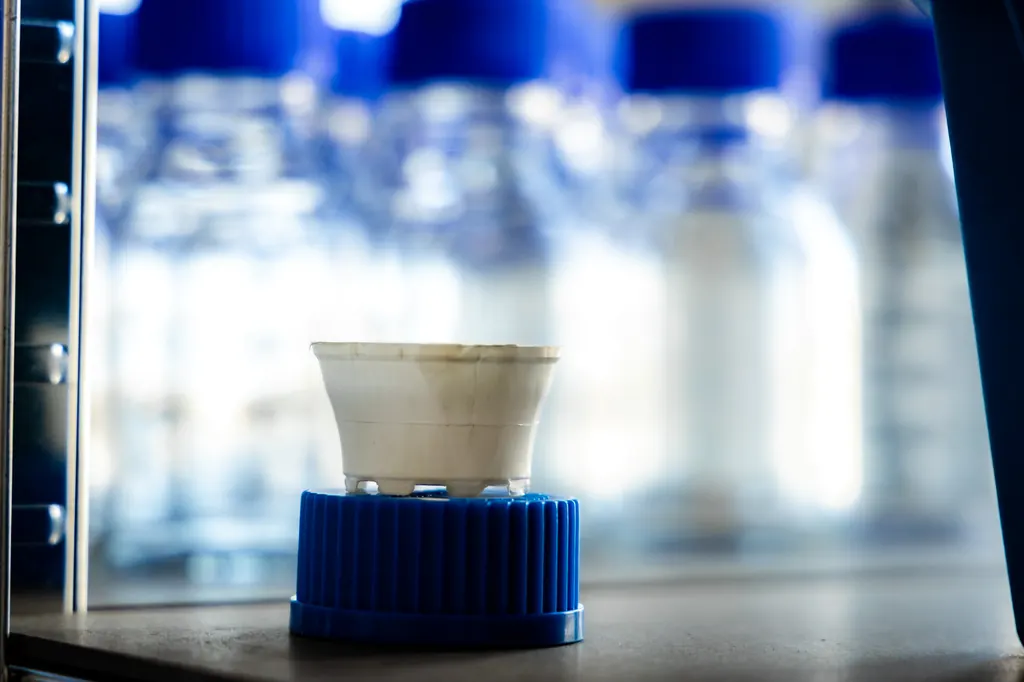
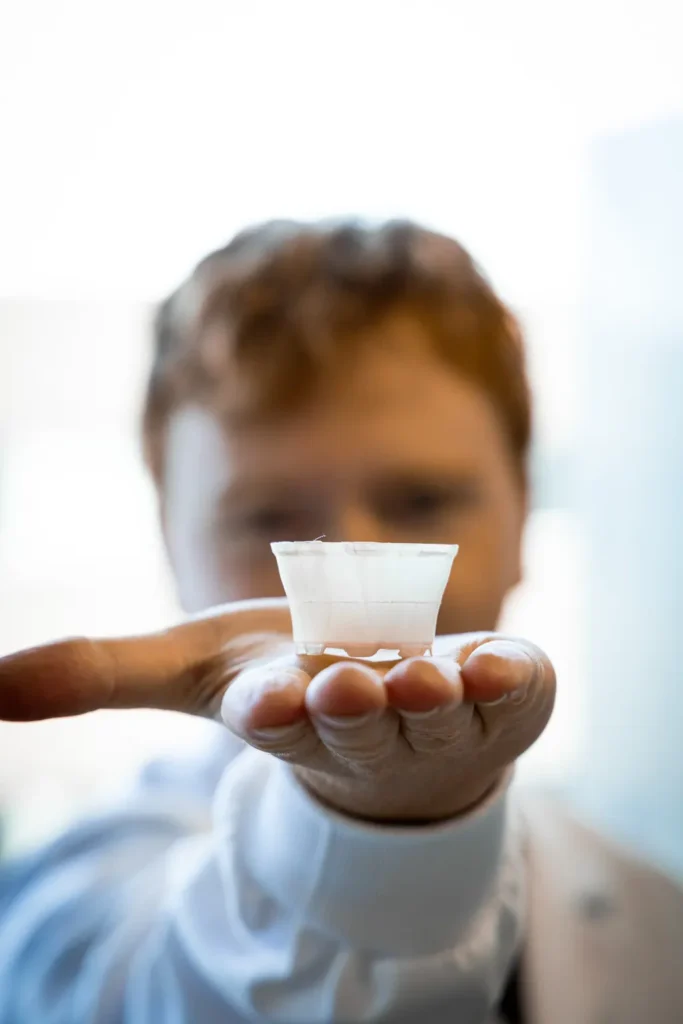
Bacterial cellulose is cellulose, the same substance as in wood and cotton. Bacteria make it themselves, as a dense sheet of very thin fibres. It contains no lignin and does not need to be melted. We shape the sheet into a cup. Read what bacterial cellulose is.
The three side by side
| Paper | PLA | Bacterial cellulose | |
|---|---|---|---|
| What is it? | Cellulose fibres from wood | A bioplastic made from plant starch or sugar | Cellulose, made by bacteria |
| How does it become a cup? | Paperboard is shaped into a cup in a mould | Melted and moulded, like ordinary plastic | The sheet is shaped into a cup with our own innovation |
| Watertight? | Usually only with a coating | Yes | Formed cups hold liquid in our laboratory tests |
| Needs a coating? | Often. That layer is often plastic. | No | No, our cup has no coating |
| Plastic under the SUP Directive? | Yes, if it has a plastic coating | Yes | See the note below |
| After use in healthcare | Usually general waste | Usually general waste | General waste for now; our goal is organic waste |
How bacterial cellulose is treated under the SUP Directive is not yet clear. The Directive only excludes natural polymers that have not been chemically modified. How that works out for cellulose grown by bacteria in culture is something we are still looking into. So we make no claim about it here.
What we do know about our cup. The cup is made of cellulose, with no coating, laminate or additives. There is no plastic in it. Our own data (details and source) We use no PFAS and no coating. This is about what we use, not a test result. The cup has not yet been tested for fluorine. Our own data (details and source)
In a published study, bacterial cellulose lost about 75% of its mass in 8 weeks buried in soil. It was a greenhouse soil-burial test. It was done on the material, not on our cup. We do not have a compostability certificate. Source (details and source) Our goal is a cup that can go in the organic waste after use and become compost. Today the cup belongs in general waste. Goal (details and source)
And plastic itself? A plastic medicine cup has a footprint of about 11.2 g CO₂-eq; a paper one about 1.5 g. Source (details and source) On that measure paper does better than plastic. The plastic lining and the waste remain a problem.
Questions
Frequently asked questions about paper, PLA and cellulose
What is PLA?
PLA, polylactic acid, is a bioplastic. It is made from starch or sugar from plants such as maize or sugar cane. It is then melted and moulded, just like plastic made from crude oil.
Is PLA a plastic?
Yes. PLA is a plastic, even though its raw material comes from plants. Under the SUP Directive, bioplastics such as PLA count as plastic too. That applies even if they are made from plants or are biodegradable.
Is PLA biodegradable?
Mainly in an industrial composting plant, where it is warm and moist. In nature it breaks down much more slowly. Many waste processors do not want PLA in the organic waste.
Is paper biodegradable?
Uncoated paper is, because it is cellulose. A paper cup with a plastic lining does not break down completely. The plastic layer is left behind.
Is cellulose a plastic?
No. Cellulose is a natural substance from plants and some bacteria. Plastic is a synthetic material. There are plastics derived from cellulose, such as cellophane. In those, the cellulose has been chemically modified. More about cellulose.
Why not simply use reusable cups?
Where possible, using fewer cups is the best step. Samen de zorg vergroenen advises wards to use fewer medicine cups by assigning a cup to one patient and reusing it. Reuse is not suitable for liquid medicines or crushed medication. Source (details and source) Read how to reduce first and then replace.
Can paper medicine cups go in the paper recycling?
That depends on the cup and on your waste processor. A cup with a plastic lining is hard to recycle and often may not go in with paper. Check with the department in your hospital that handles waste.
Want to see how the cup performs on your ward?
Sources and evidence
Everything we claim on this page, with the source, the conditions and the date we last checked it. Our own testing is marked as Internal test, plans as Goal. So you can check for yourself what each claim rests on.
Show all 8 sourcesHide sources
Source Paper disposable cups often have a plastic coating to make them watertight. Under EU rules that makes them a single-use plastic product.
- Source
- Directive (EU) 2019/904 (single-use plastics) and European Commission guidelines (2021/C 216/01)
- Link
- eur-lex.europa.eu/eli/dir/2019/904/oj (opens in a new tab)
- Conditions
- Applies to paper cups with a plastic lining or coating.
- Status
- Source
- Last checked
- 9 October 2026
Source Under the SUP Directive, bioplastics such as PLA count as plastic too. That applies even if they are made from plants or are biodegradable.
- Source
- Directive (EU) 2019/904 (single-use plastics), recital 11, and European Commission guidelines (2021/C 216/01)
- Link
- eur-lex.europa.eu/eli/dir/2019/904/oj (opens in a new tab)
- Conditions
- Only natural polymers that have not been chemically modified fall outside the Directive. The European Commission guidelines are not binding.
- Status
- Source
- Last checked
- 10 October 2026
Our own data The cup is made of cellulose, with no coating, laminate or additives. There is no plastic in it.
- Source
- Plastilose product specification (2026)
- Conditions
- This follows from the composition of the product. We do not yet have a microplastics test report.
- Status
- Our own data
- Last checked
- 8 October 2026
Our own data We use no PFAS and no coating.
- Source
- Plastilose product specification (2026)
- Conditions
- This is about what we use, not a test result. The cup has not yet been tested for fluorine.
- Status
- Our own data
- Last checked
- 8 October 2026
Source In a published study, bacterial cellulose lost about 75% of its mass in 8 weeks buried in soil.
- Source
- Bueno et al., Polymer Degradation and Stability 217:110535 (2023)
- Link
- DOI 10.1016/j.polymdegradstab.2023.110535 (opens in a new tab)
- Conditions
- It was a greenhouse soil-burial test. It was done on the material, not on our cup. We do not have a compostability certificate.
- Status
- Source
- Last checked
- 25 August 2026
Goal Our goal is a cup that can go in the organic waste after use and become compost.
- Source
- Plastilose (2026)
- Conditions
- This is a goal, not a property of today's cup. Today the cup goes in general waste. We are still testing organic-waste and paper-recycling routes with waste processors. Nothing has been agreed. We do not have a compostability certificate.
- Status
- Goal
- Last checked
- 8 October 2026
Source A plastic medicine cup has a footprint of about 11.2 g CO₂-eq; a paper one about 1.5 g.
- Source
- Samen de zorg vergroenen, intervention 'Medicijncupje van papier' (paper medicine cup)
- Link
- samendezorgvergroenen.nl/interventie/medicijncupje-van-papier (opens in a new tab)
- Conditions
- Per 30 ml cup, published by Samen de zorg vergroenen.
- Status
- Source
- Last checked
- 9 October 2026
Source Samen de zorg vergroenen advises wards to use fewer medicine cups by assigning a cup to one patient and reusing it. Reuse is not suitable for liquid medicines or crushed medication.
- Source
- Samen de zorg vergroenen, intervention 'Gebruik medicijncupjes verminderen' (use fewer medicine cups)
- Link
- samendezorgvergroenen.nl/interventie/gebruik-medicijncupjes-verminderen (opens in a new tab)
- Conditions
- This is the platform's recommendation for wards, not research by Plastilose.
- Status
- Source
- Last checked
- 10 October 2026