Mission and timeline
We do not only make cups. We are developing a new kind of factory.
The medicine cup is our first product, not our end goal. Our goal is a worldwide network of factories, our own and partners' under licence, that turn waste streams into disposables without plastic. Goal (details and source)
Why we do this
Why, how and what.
Why
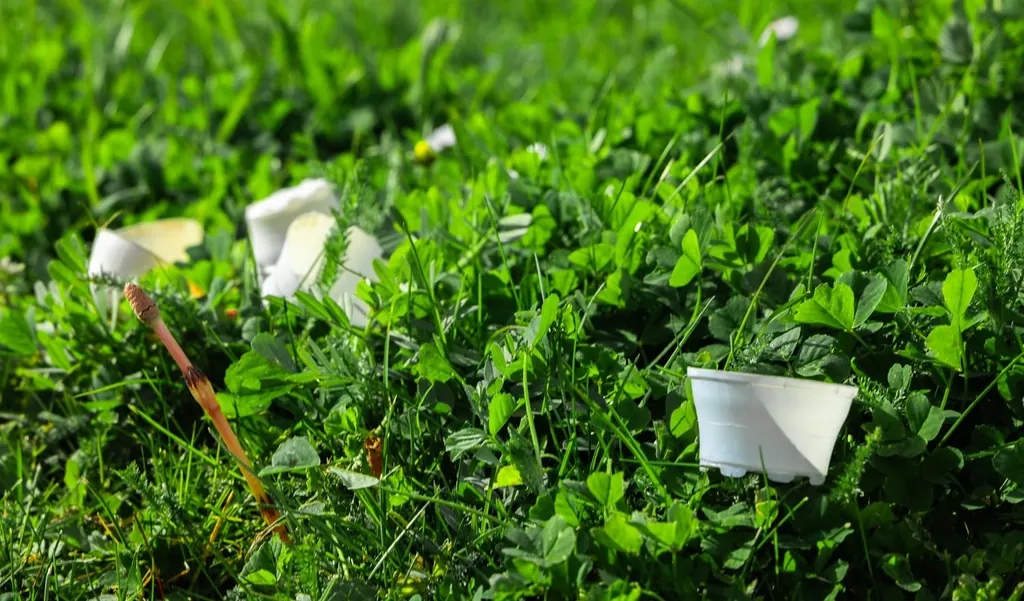
Disposables are often needed, in healthcare above all. But after one use, plastic is left behind, year after year. That can change.
How
Our bacteria grow on side streams from the food industry, not on food itself. Our own data (details and source) We turn it into rigid disposables. We design every production line so it can be built again. We can do that, and so can partners.
What
First the medicine cup for healthcare. Then more products, our own production line and factories at partners.
What we want to achieve
The cup is the start. The factory is the product.
We do not just want to sell cups, but the way to make them. That is a factory that turns waste streams into disposables without plastic. First we build it ourselves. Then partners build it, all over the world.
- 1
One production line of our own
Our plan is our own production line for 1 million cups a week. We aim for the first cups at the end of 2028 and full capacity in 2030. Goal (details and source)
- 2
Licences to partners
The first licence is planned for 2030. After that, partners can build factories with our process, each with a line of 1 million cups a week. Goal (details and source)
- 3
100 million a week
In the long term we want to make 100 million products a week, on our own lines and with partners. The medicine cup is where it starts. Goal (details and source)
- 4
Back to the soil
We want to bring products into the world whose end of life does no harm. Our goal is that such a product breaks down after use. We are not there yet. Today the cup still belongs in general waste. Goal (details and source)
Why we start in healthcare
In healthcare a disposable is often truly needed, and reuse is hard. The requirements are strict. If it works there, the step to other markets is smaller. And the numbers are large. Dutch healthcare alone uses over 50 million plastic medicine cups a year. Estimate (details and source) How we worked it out
What we stand for
Four things we hold on to.
Honest about what we know
Every claim says where it comes from: a study, our own test or a goal. We also say what we do not know yet.
All sourcesHealthcare first
In healthcare, single-use items are often necessary and reuse is difficult. That is where a better cup makes the biggest difference, so that is where we start.
Built to scale
A nice product in the lab is not enough. Everything we do now must also work later, at a million cups a week.
Designed to be replicated
We are not building a factory that exists only once. We design every line so a partner can build it again, anywhere in the world.
Timeline
From a jar in the kitchen to factories all over the world.
Scroll through the years. Up to October 2026 it has happened. After that it is our plan: watch production grow, from one jar to a network of factories.
2024
Tests in the kitchen
After graduating, Jason grows his first cellulose at home in his kitchen.
BlueCity, Rotterdam
The tests move to BlueCity. Joram joins to turn it into a company. The first product is a straw.
2025
Listening to healthcare
Around the turn of the year we talk to buyers, hospital pharmacists and nurses at more than 100 healthcare organisations. That is how we arrive at the medicine cup.
December: Plastilose becomes a company
Plastilose Operations B.V. is registered in Rotterdam. Source (details and source)
2026
January: Biotech Campus Delft
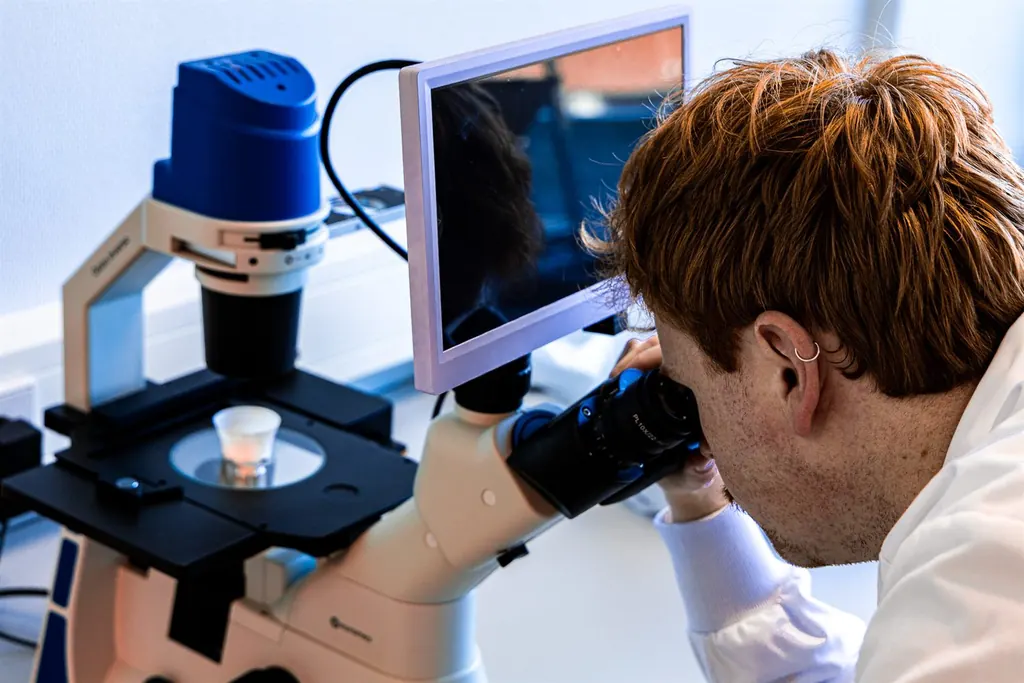
Since January 2026 our lab, workshop and office have been at Biotech Campus Delft. Our own data (details and source)
March: patent filed
In March 2026 Plastilose filed a Dutch patent application. Source (details and source)
April: pilot at Maasstad Ziekenhuis
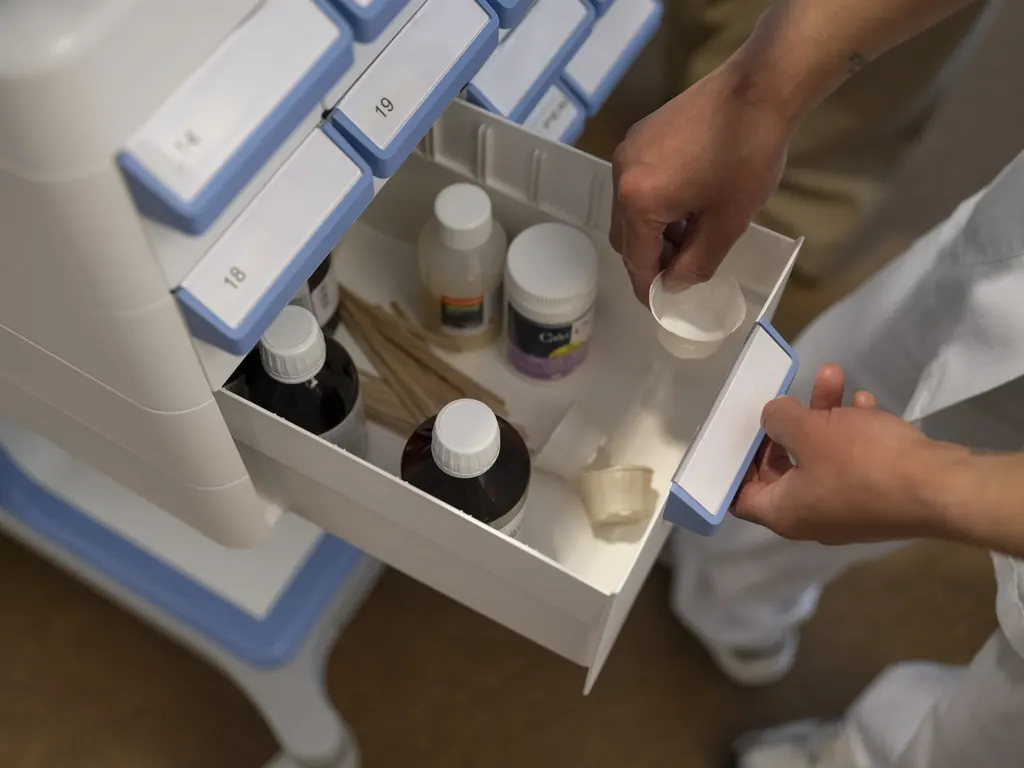
A pilot is running at Maasstad Ziekenhuis in Rotterdam, where hospital staff test our cup during the medication round. Source (details and source)
From April: healthcare gets in touch
Since April 2026, more than 45 healthcare organisations and distributors have come to us unprompted. Our own data (details and source)
June: Nieuwe Heldenprijs
Plastilose won the Nieuwe Heldenprijs 2026. Source (details and source)
KVK Innovation Top 100
Plastilose was selected for the KVK Innovatie Top 100 2026, in the Circular Economy category. Source (details and source)
October: first sample cups
In October 2026 the first sample cups go to hospitals that are considering a pilot. Our own data (details and source)
Today, October 2026
This is where we are. Our team consists of two co-founders and five employees. We also have two advisers. Our own data (details and source) We are building the pilot line in Delft.
From here on it is our plan. These are goals and plans, not forecasts or commitments. They depend on funding and on what we learn on the pilot line. Dates and numbers may change.
End 2026
The pilot line runs
A pilot line for about 10,000 cups a week, under construction in Delft, with the goal of running by the end of 2026. Goal (details and source)
2027
Ready for the next step
Our manufacturing process is at TRL 4 to 5. TRL is a scale from 1 to 9 that shows how far a technology has developed. We aim to reach TRL 5 in early 2027. Our own data (details and source)
2028
Our own production line
The line for 1 million cups a week. Our goal is that the first cups come off it at the end of 2028. The plan is our first goal above. Goal (details and source)
2029
More products
The medicine cup will be followed by a lid, then larger cups and coffee cups, then small trays and kidney dishes. Beyond healthcare we aim to make the first products from 2029. Goal (details and source)
2030
The first factory at a partner
Our goal is that our own line then runs at full capacity and that a first partner builds a factory with our process. Goal (details and source)
Later
Factories all over the world
Each factory turns local waste streams into disposables without plastic. That is how a network grows, country by country. In the long term we want to make 100 million products a week, on our own lines and with partners. The medicine cup is where it starts. Goal (details and source)
- A jar in the kitchen
- The lab in Delft
- Pilot line: 10,000 a week
- Own line: 1 million a week
- Partners: each line 1 million a week
- Goal: 100 million a week
These are goals and plans, not forecasts or commitments. They depend on funding and on what we learn on the pilot line. Dates and numbers may change.
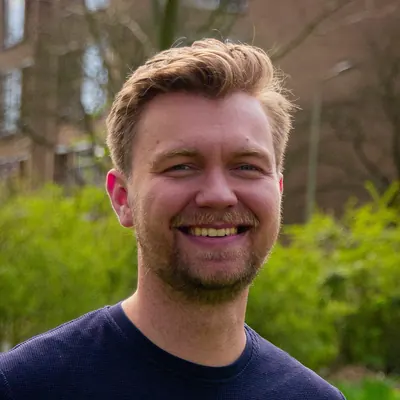
“I want to use my knowledge, privileges and time to leave the world better than I found it.”
That is the main reason I am building Plastilose. This company is my chance to make that real.
Build with us
Help us build the first factory.
-
-
 Staged photo
 -
Careers at Plastilose
Microbiology, engineering and automation. Help us build our production.
Send an open application
Sources and evidence
Everything we claim on this page, with the source, the conditions and the date we last checked it. Our own testing is marked as Internal test, plans as Goal. So you can check for yourself what each claim rests on.
Show all 19 sourcesHide sources
Goal Our goal is a worldwide network of factories, our own and partners' under licence, that turn waste streams into disposables without plastic.
- Source
- Plastilose (2026)
- Conditions
- This is our vision, not a plan with fixed numbers or years. No factory and no licence exists yet.
- Status
- Goal
- Last checked
- 9 October 2026
Our own data Our bacteria grow on side streams from the food industry, not on food itself.
- Source
- Plastilose process documentation (2026)
- Conditions
- We do not disclose which streams.
- Status
- Our own data
- Last checked
- 8 October 2026
Goal Our plan is our own production line for 1 million cups a week. We aim for the first cups at the end of 2028 and full capacity in 2030.
- Source
- Plastilose business plan 2026-2036
- Conditions
- This is a plan that depends on financing.
- Status
- Goal
- Last checked
- 8 October 2026
Goal The first licence is planned for 2030. After that, partners can build factories with our process, each with a line of 1 million cups a week.
- Source
- Plastilose business plan 2026-2036
- Conditions
- This is a plan, not an agreement. No licence exists yet.
- Status
- Goal
- Last checked
- 8 October 2026
Goal In the long term we want to make 100 million products a week, on our own lines and with partners. The medicine cup is where it starts.
- Source
- Plastilose business plan 2026-2036
- Conditions
- This is an ambition, not a forecast.
- Status
- Goal
- Last checked
- 8 October 2026
Goal Our goal is a cup that can go in the organic waste after use and become compost.
- Source
- Plastilose (2026)
- Conditions
- This is a goal, not a property of today's cup. Today the cup goes in general waste. We are still testing organic-waste and paper-recycling routes with waste processors. Nothing has been agreed. We do not have a compostability certificate.
- Status
- Goal
- Last checked
- 8 October 2026
Estimate Over 50 million plastic medicine cups a year, in Dutch healthcare alone
- Source
- Plastilose market analysis: how many medicine cups does Dutch healthcare use? (2026)
- Link
- plastilose.nl/en/healthcare/market-analysis
- Conditions
- A conservative lower bound. Our own bottom-up estimate comes to 89 to 143 million, with 112 million as the best estimate. Not externally verified.
- Status
- Estimate
- Last checked
- 8 October 2026
Source Plastilose started in 2024 when Jason Smit, newly graduated, began experimenting, first in his own kitchen and then at BlueCity in Rotterdam. It was incorporated in December 2025 and is registered in Rotterdam. Its lab and office are at Biotech Campus Delft.
- Source
- Netherlands Chamber of Commerce register; Plastilose business plan, version 4.1
- Conditions
- It began as Jason's own project, not as a university project.
- Status
- Source
- Last checked
- 8 October 2026
Our own data Since January 2026 our lab, workshop and office have been at Biotech Campus Delft.
- Source
- Plastilose (2026)
- Conditions
- Our address: Alexander Fleminglaan 1, Delft.
- Status
- Our own data
- Last checked
- 9 October 2026
Source Patent pending (Dutch application filed March 2026).
- Source
- Dutch patent application, filed 11 March 2026
- Conditions
- An application is not a granted patent.
- Status
- Source
- Last checked
- 8 October 2026
Source A pilot is running at Maasstad Ziekenhuis in Rotterdam, where hospital staff test our cup during the medication round.
- Source
- Maasstad Ziekenhuis press release, 9 April 2026
- Link
- maasstadziekenhuis.nl/nieuws/pilot-medicijncupjes (opens in a new tab)
- Conditions
- No patients take part yet. We share results only after the joint publication with Maasstad, expected in early November 2026.
- Status
- Source
- Last checked
- 8 October 2026
Our own data 45+ healthcare organisations and distributors have come to us unprompted since April 2026
- Source
- Plastilose CRM records, October 2026
- Conditions
- Count from our customer system (CRM), cleaned in October 2026: no private individuals, duplicates or lost leads. We did no outreach in that period. Interest is not an order.
- Status
- Our own data
- Last checked
- 9 October 2026
Source Winner of the Nieuwe Heldenprijs 2026.
- Source
- Nieuwe Heldenprijs 2026
- Link
- rotterdamseondernemersprijs.nl/2026/06/02/dura-vermeer-wint-rotterdamse-ondernemersprijs-2026 (opens in a new tab)
- Conditions
- Awarded on 2 June 2026.
- Status
- Source
- Last checked
- 8 October 2026
Source Selected for the KVK Innovatie Top 100 2026 (Circulaire economie).
- Source
- KVK Innovatie Top 100, 2026
- Link
- kvkinnovatietop100.nl/site/top-100-2026 (opens in a new tab)
- Conditions
- Annual selection by the Netherlands Chamber of Commerce.
- Status
- Source
- Last checked
- 8 October 2026
Our own data In October 2026 the first sample cups go to hospitals that are considering a pilot.
- Source
- Plastilose (2026)
- Conditions
- We make them by hand in our Delft lab until the pilot line runs.
- Status
- Our own data
- Last checked
- 9 October 2026
Our own data Two founders, five employees and two advisers.
- Source
- Plastilose (2026)
- Conditions
- This is the position as of October 2026.
- Status
- Our own data
- Last checked
- 8 October 2026
Goal A pilot line for about 10,000 cups a week, under construction in Delft, with the goal of running by the end of 2026.
- Source
- Plastilose business plan 2026-2036
- Conditions
- This is a target, not current output.
- Status
- Goal
- Last checked
- 8 October 2026
Our own data Our manufacturing process is at TRL 4 to 5, with TRL 5 targeted for early 2027.
- Source
- Plastilose internal assessment (2026)
- Conditions
- This is measured against the bioprocess, not the product.
- Status
- Our own data
- Last checked
- 8 October 2026
Goal The medicine cup will be followed by a lid, then larger cups and coffee cups, then small trays and kidney dishes. Beyond healthcare we aim to make the first products from 2029.
- Source
- Plastilose business plan 2026-2036
- Conditions
- This is an ambition. The order and timing after the medicine cup are not fixed yet.
- Status
- Goal
- Last checked
- 8 October 2026