Plastilose sustainable medication cup made from bacterial cellulose

Sustainable Healthcare

The First Plastic-Free Medication Cup from the Netherlands

100% plastic-free, PFAS-free and naturally biodegradable within 3 months. Made from bacterial cellulose, co-developed with healthcare institutions.

100% Plastic-Free PFAS-Free 3 Months Biodegradable ISO 10993
  1. Home
  2. /
  3. Knowledge
  4. /
  5. Sustainable Medication Cup

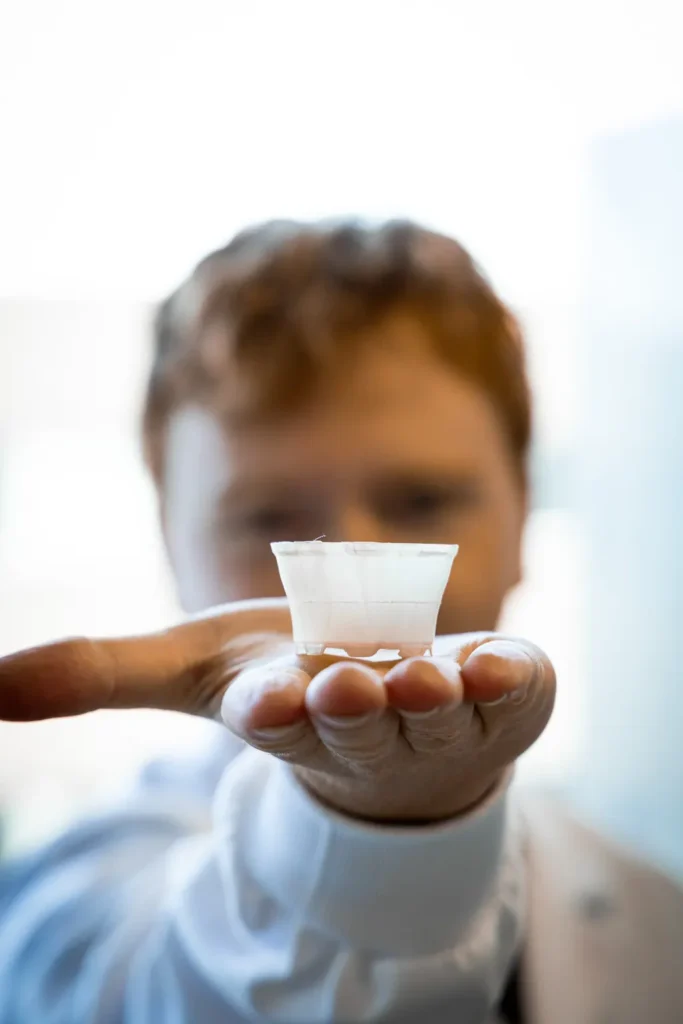
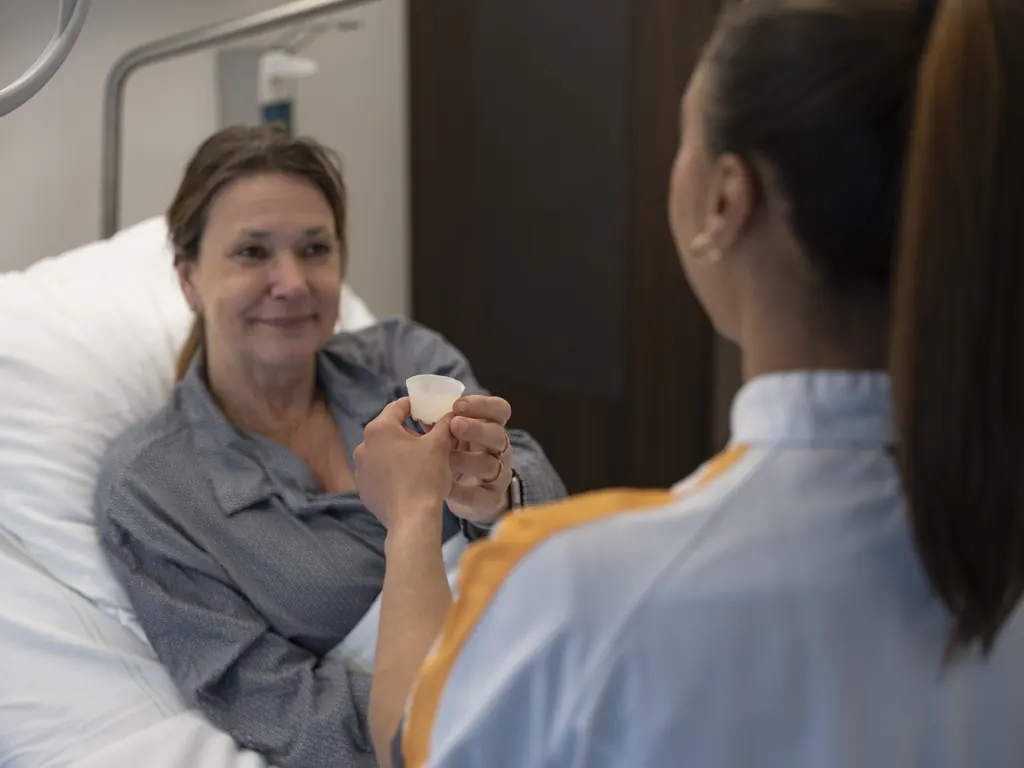
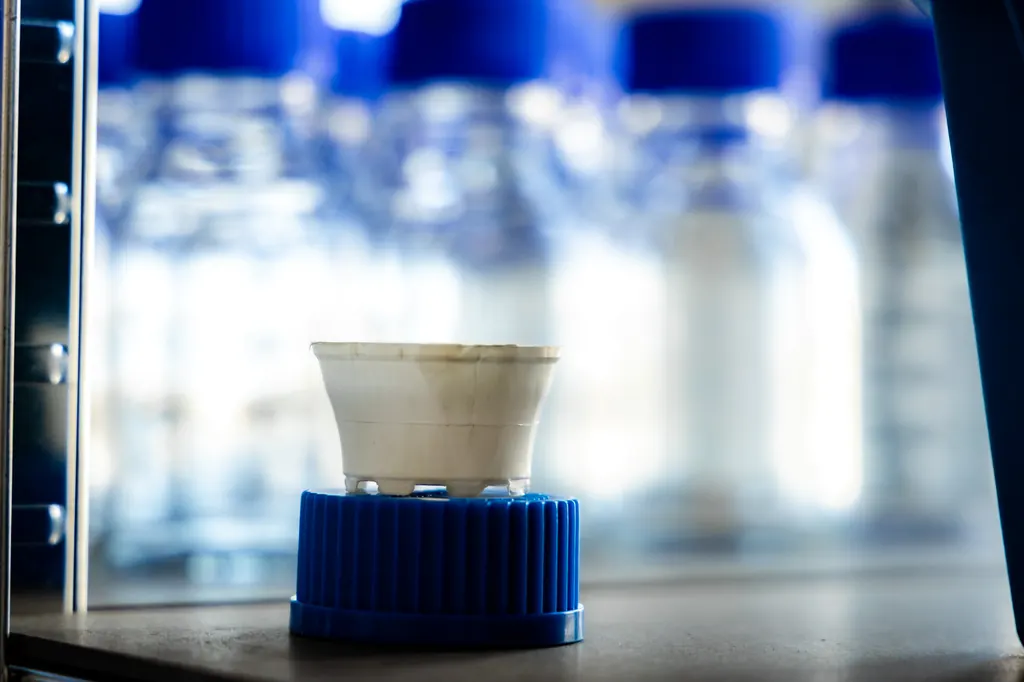
The sustainable medication cup by Plastilose is the first 100% plastic-free, PFAS-free medication cup from the Netherlands. Made from bacterial cellulose, a pure biopolymer grown by micro-organisms from Dutch sugar industry waste streams. The cup performs like plastic but fully biodegrades within 3 months in nature, leaving no microplastics or toxic residues behind.

The Problem

50 Million Plastic Medication Cups Per Year

Healthcare institutions in the Netherlands use tens of millions of plastic medication cups annually. All single-use, all incinerated. And paper alternatives almost always contain plastic coating and PFAS.

30+ Million Per Year

Hospitals and care institutions alone discard over 30 million plastic medication cups annually. That is 82,000 cups per day.

95% of Paper Cups Contain PFAS

"Sustainable" paper cups almost always contain plastic coating and PFAS, forever chemicals that accumulate in the body and never break down in the environment.

Microplastics in Patients

Every plastic cup contributes to microplastics. Recent research shows microplastics are now measurable in human blood. Healthcare must become part of the solution.

Joram and Jason, founders of Plastilose

About Plastilose

We're Building the Solution

Rotterdam mentality, Delft expertise. We are Joram and Jason. Born at BlueCity Rotterdam, now producing at Biotech Campus Delft.

Our material: bacterial cellulose. A natural biopolymer grown by micro-organisms from Dutch sugar industry waste streams. It feels like plastic, but is 100% natural.

The key difference? Throw our cup in the forest, in a ditch, or in any bin, after 3 months it has completely disappeared. No microplastics, no PFAS, no toxins.

"It feels like plastic, but is sustainable"

Read our story in the AD

The Product

Our Medication Cup

A medication cup as functional as plastic, without the environmental impact. Developed for Dutch healthcare, tested for safety and sustainability.

>99%

Pure Biopolymer

Bacterial cellulose, chemically identical to plant cellulose but >99% pure. No lignin, no hemicellulose, no contaminants.

200 MPa

Stronger than PP Plastic

Tensile strength up to 200 MPa. Ideal for daily use in healthcare, compatible with pill crushers.

0

PFAS, Plastic & Microplastics

No forever chemicals, no plasticisers, no microplastics. Safe for direct medication contact. Guaranteed.

3 mo

Naturally Biodegradable

Throw it in nature, in water, or in any bin. Fully degraded within 3 months. No toxic residues.

Science

Scientifically Proven Safe

Our material has been extensively studied by independent scientists worldwide. All claims are based on peer-reviewed research.

>99%

Chemical Purity

Crystallinity of 84-93% ensures a stable molecular structure. No extractables or contaminants.

0

Reactions with Medication

FTIR spectroscopy shows: no chemical interaction between BC and medication (Jantarat et al., 2021).

GRAS

FDA Status

Recognised as "Generally Recognized as Safe" by the FDA for food contact. BC wound dressings are already on the market as medical devices.

ISO

Biocompatibility

Tested per ISO 10993: non-cytotoxic, no inflammatory response, no foreign body response. NOAEL >5,000 mg/kg/day.

121°C

Sterilisable

Compatible with autoclave (121°C), gamma radiation (25 kGy) and ethylene oxide. Structure is preserved.

3 mo

Natural Degradation

Fully degrades in nature, water or soil. No special processing required. Compatible with any waste stream.

Plastilose CTO in the laboratory Bacterial cellulose research at Plastilose Laboratory work at Plastilose Rotterdam

Production Process

From Waste Stream to Medication Cup

Our circular production process at Biotech Campus Delft.

01

Fermentation

Selected micro-organisms convert sugar-rich waste streams from the Dutch sugar industry into pure bacterial cellulose. Crystallinity: 84-93%.

02

Purification

The cellulose is washed and purified to a nanofibre network with >99% purity, fully natural and suitable for medical use.

03

Shaping

The cellulose is pressed and moulded into stable medication cups. The strong nanofibre network retains shape and rigidity, even in contact with liquids.

Comparison

Honest Comparison

How does the Plastilose medication cup compare to plastic, paper and stainless steel? No marketing, just facts.

PropertyPlastilosePlastic (PP)Paper + CoatingStainless Steel (Reusable)
100% Plastic-free✓ Yes✗ No✗ Coating✓ Yes
PFAS-free✓ Guaranteed✗ No✗ 95% contain PFAS✓ Yes
Naturally biodegradable✓ 3 months✗ Centuries✗ Coating persists~ N/A
No microplastics✓ Yes✗ No✗ No✓ Yes
Medication-safe✓ ISO 10993✓ Yes~ Limited✓ Yes
Sterilisable✓ All methods~ Limited✗ No✓ Autoclave
Disposable (no logistics)✓ Yes✓ Yes✓ Yes✗ Wash + autoclave

Impact

Real Impact, No Greenwashing

Concrete figures on what switching means, and why it doesn't matter which bin the cup ends up in.

65-95%

Less CO₂

Compared to plastic cups

0

Microplastics

In the environment

0

PFAS

Exposure

3 mo

Degradation

In nature

Works with Any Waste Stream

In a busy healthcare setting, it's impossible to put every cup in the right bin. With Plastilose, it doesn't matter.

Compost ✓ General Waste ✓ Paper ✓ Nature ✓ Water ✓

Calculate Your Impact

How many medication cups does your institution use per year?

50,000
3.5
kg plastic saved
17.5
kg CO₂ avoided
0
microplastics
0
PFAS exposure
Plastic cups100%
Plastilose cups15-25%

FAQ

Frequently Asked Questions

Yes. We use exclusively bacterial cellulose, a natural biopolymer with >99% purity. No plastic, no PFAS, no synthetic coatings. Unlike paper cups, which almost always contain plastic coating (and 95% contain PFAS).

No. FTIR spectroscopy studies have demonstrated that no chemical interaction occurs between bacterial cellulose and medication. The material holds GRAS status from the FDA and has been tested per ISO 10993 standards for biocompatibility.

Within 3 months, anywhere: in nature, in water, in soil, or in any waste bin. Plastic cups persist for centuries. Paper cups with coating likewise. Only Plastilose disappears completely, without microplastics or toxic residues.

Yes. Compatible with all common sterilisation methods: autoclave (121°C), gamma radiation (25 kGy) and ethylene oxide. Structure and properties are preserved after sterilisation.

Traditional medication cups are made from polypropylene (PP) plastic. "Sustainable" alternatives are often paper with plastic or paraffin coating that contains PFAS. The Plastilose medication cup is made from bacterial cellulose, a 100% natural biopolymer without any synthetic components.

There are three alternatives: (1) paper cups (usually contain plastic coating + PFAS), (2) stainless steel reusable cups (require autoclave sterilisation and logistics), (3) bacterial cellulose cups from Plastilose (disposable, fully plastic- and PFAS-free, biodegradable). Only option 3 combines disposable convenience with full sustainability.

An average Dutch hospital uses 50,000 to 300,000 medication cups per year. Care group Amstelring reported 629,000 cups per year before switching to reusable alternatives. Nationally, this amounts to tens of millions of cups per year.

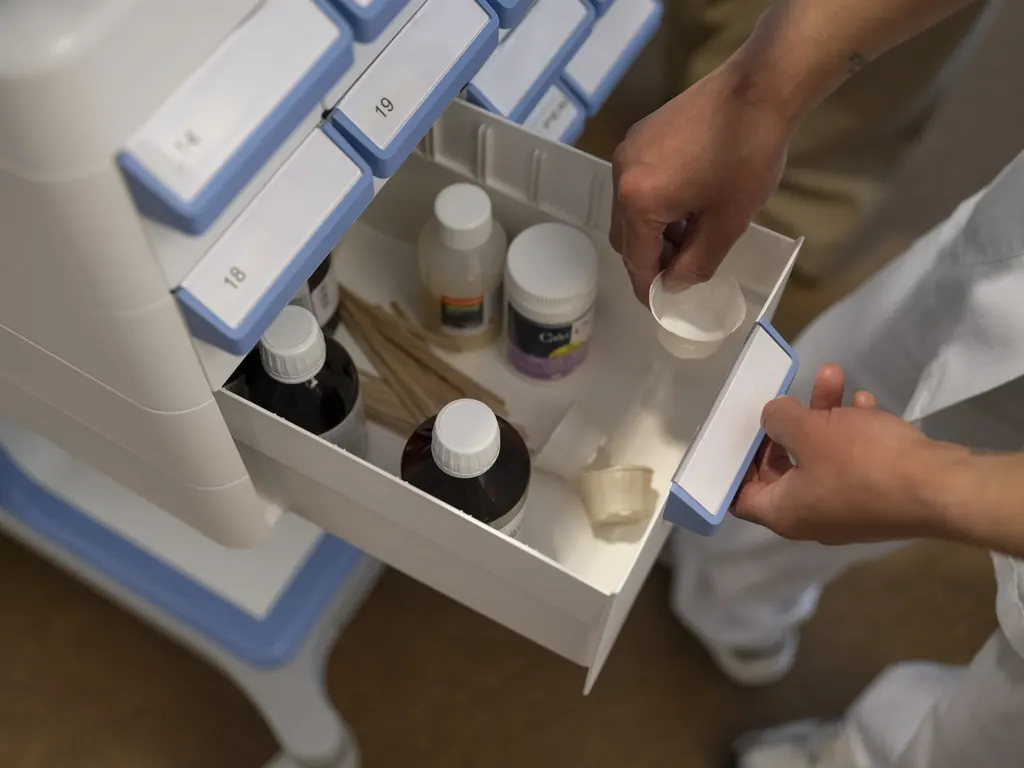
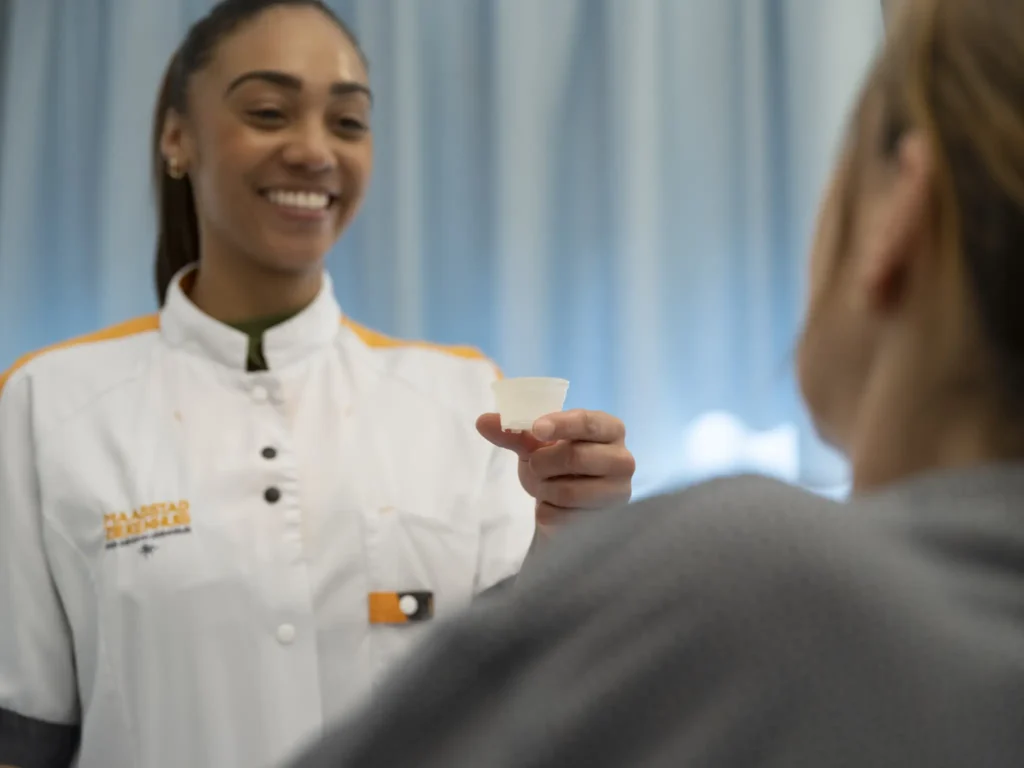
Yes. We develop the cup together with healthcare institutions so it fits seamlessly into existing workflows and on standard medication trays (such as Wiegand). The goal is zero additional workload for nursing staff.

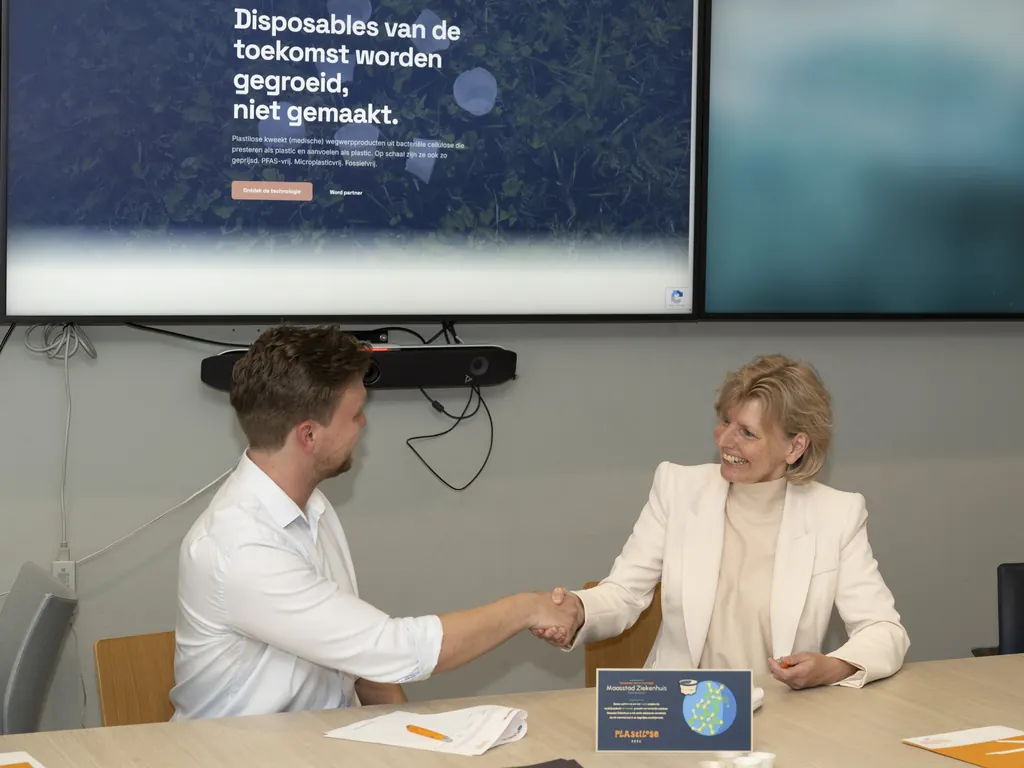
Get in touch via our contact form for a sample and personal advice. We are happy to work with forward-thinking healthcare institutions looking to make the medication round more sustainable.

The Dutch Green Deal Sustainable Care 3.0 targets 25% less waste by 2026 and full circularity by 2050. The NFU has placed medication cups on the shortlist of 22 medical disposables to tackle. The EU PPWR regulation is tightening PFAS restrictions from August 2026. Switching to Plastilose directly contributes to these goals: less plastic waste, no PFAS, and fully biodegradable material.

Scientific Evidence

View all 15 scientific sources

Safety & Biocompatibility

  • Girard, V.-D. et al. (2024). In vitro and in vivo biocompatibility of bacterial cellulose. J. Biomed. Mater. Res. B, 112(10). DOI
  • Hagiwara, A. et al. (2010). 28-day oral toxicity study of fermentation-derived cellulose in F344 rats. J. Toxicol. Sci., 35(3). DOI
  • Costa, A.F.S. et al. (2017). A review on the toxicology and dietetic role of bacterial cellulose. Toxicol. Reports, 4. DOI

Drug Interaction

  • Jantarat, C. et al. (2021). Drug release behavior of BC loaded with ibuprofen and propranolol. RSC Advances, 11(60). DOI
  • Ullah, H. et al. (2016). Applications of BC in food, cosmetics and drug delivery. Cellulose, 23(4). DOI
  • Abeer, M.M. et al. (2014). BC-based drug delivery systems. J. Pharm. Pharmacol., 66(8). DOI

Material & Mechanical Properties

  • Gao, M. et al. (2019). Natural in situ fabrication method of functional BC. Nature Comms., 10(1). DOI
  • Park, S. et al. (2010). Cellulose crystallinity index. Biotechnol. Biofuels, 3. DOI

Biodegradability

  • Picheth, G.F. et al. (2017). BC in biomedical applications: A review. Int. J. Biol. Macromol., 104(A). DOI
  • Sathish, S. et al. (2023). Biodegradability of BC below the soil. Polym. Degrad. Stab., 216. DOI

Medical Devices & FDA

  • Czaja, W.K. et al. (2007). Future prospects of microbial cellulose in biomedical applications. Biomacromolecules, 8(1). DOI

Regulation & Market

Ready to make the medication round sustainable?

Request a free sample or get in touch for a no-obligation conversation about the possibilities for your institution.

Deze website gebruikt cookies voor een optimale ervaring. Lees onze privacyverklaring voor meer informatie