
Bio-manufactured materials
The future of disposables is grown, not made.
Plastilose grows medical disposables from bacterial cellulose that perform like plastic and feel like plastic. At scale, they're priced like plastic too. PFAS-free. Microplastic-free. Fossil-free.
Founding Partner Programme
Maasstad Hospital is already on board. Will your hospital be next?
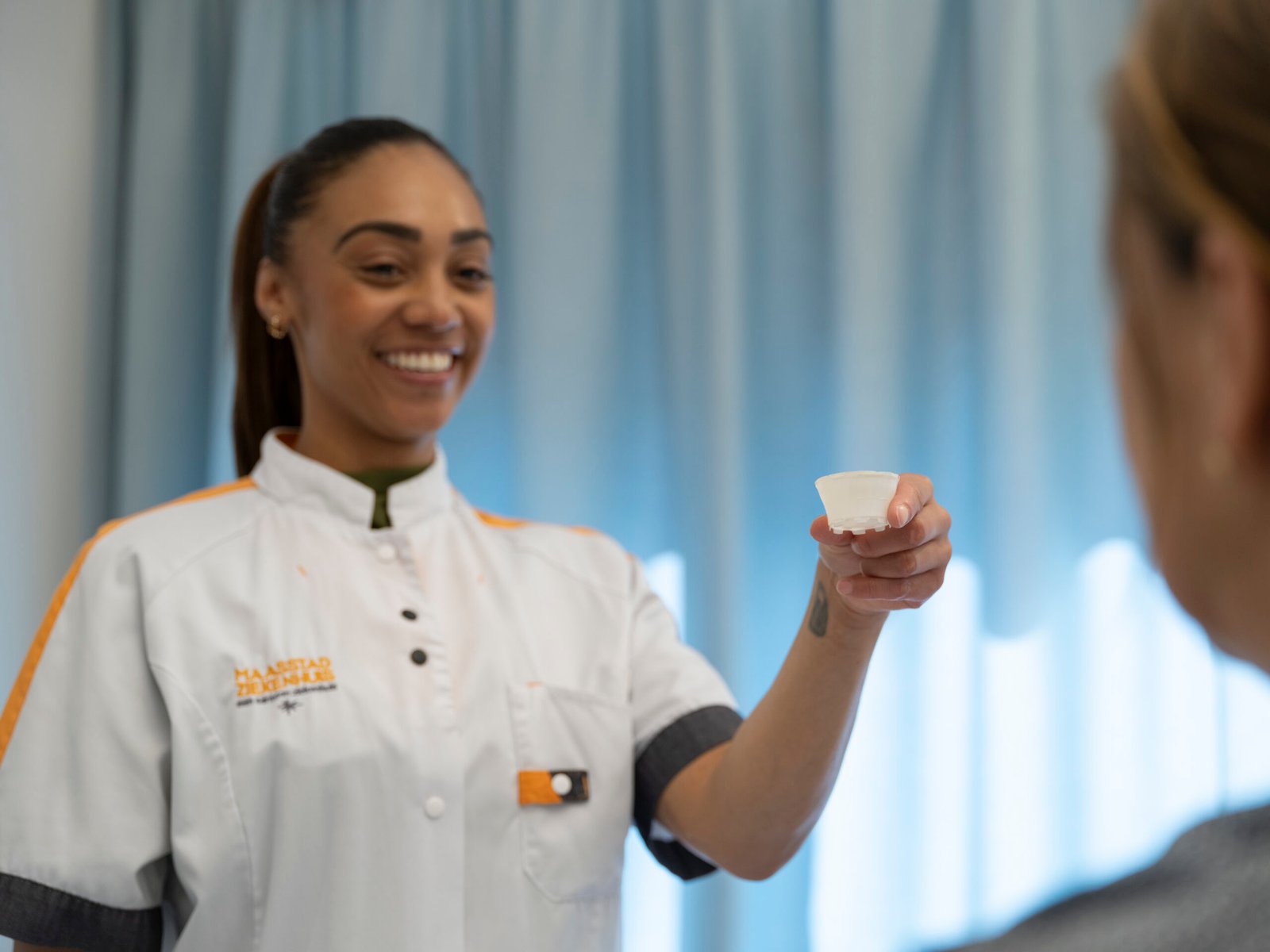
Maasstad Hospital in Rotterdam is the first Founding Partner and will start using plastic-free medicine cups made from bacterial cellulose in 2026. We are now selecting the next hospitals for our pilot programme.

We don't manufacture disposables. We grow them.
Plastilose uses bacterial fermentation to grow cellulose, a strong, flexible, waterproof biomaterial. We transform it into functional 3D products that match plastic performance, using agricultural waste streams as feedstock.

Agricultural rest streams and food industry waste serve as feedstock, turning waste into value.
Komagataeibacter bacteria ferment the feedstock at 30 °C, growing a cellulose pellicle in days.
The harvested cellulose is a strong, flexible, waterproof biomaterial, nature's alternative to plastic.
Patent-pending post-processing forms the cellulose into functional 3D disposables like medicine cups.
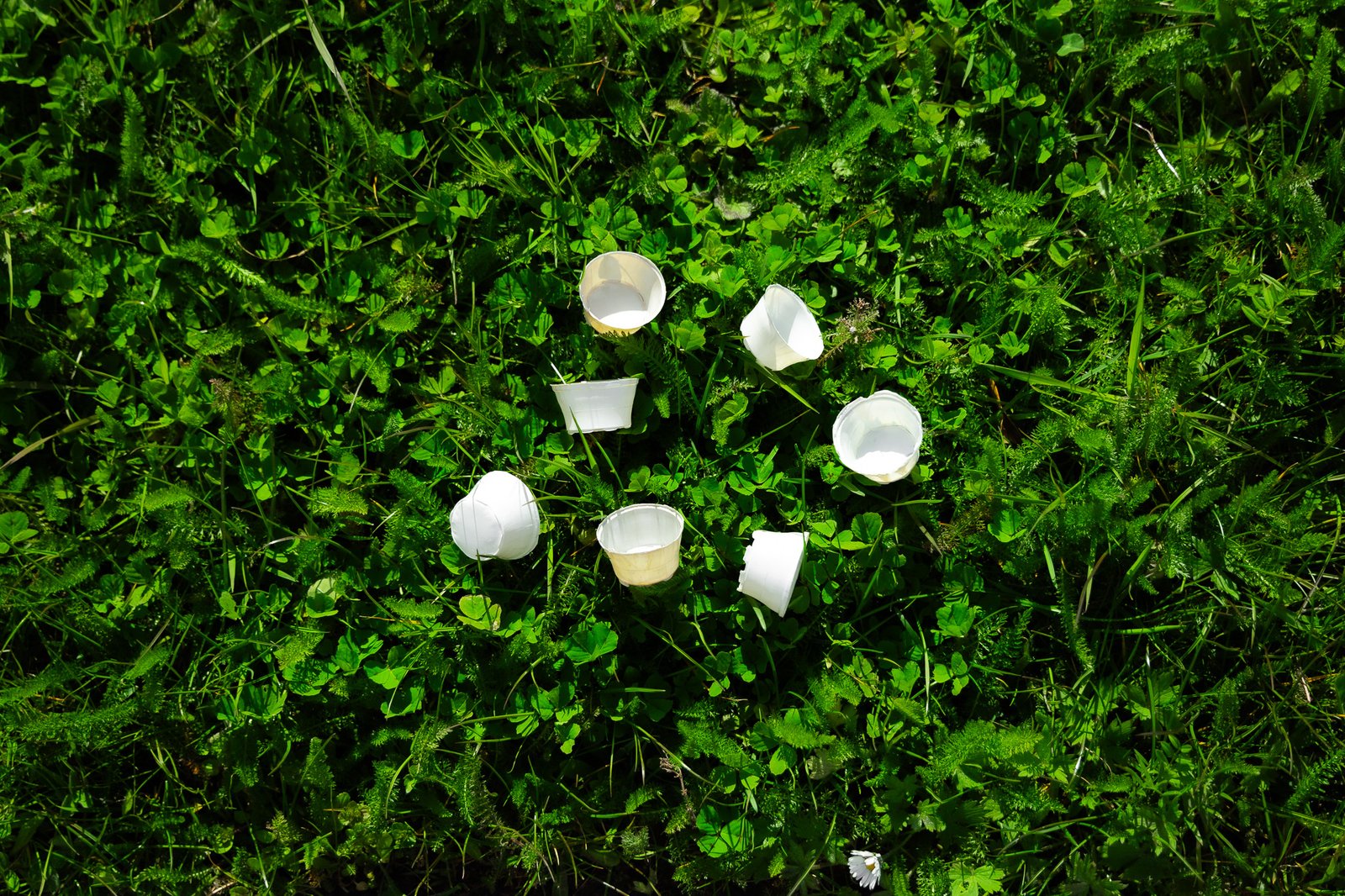
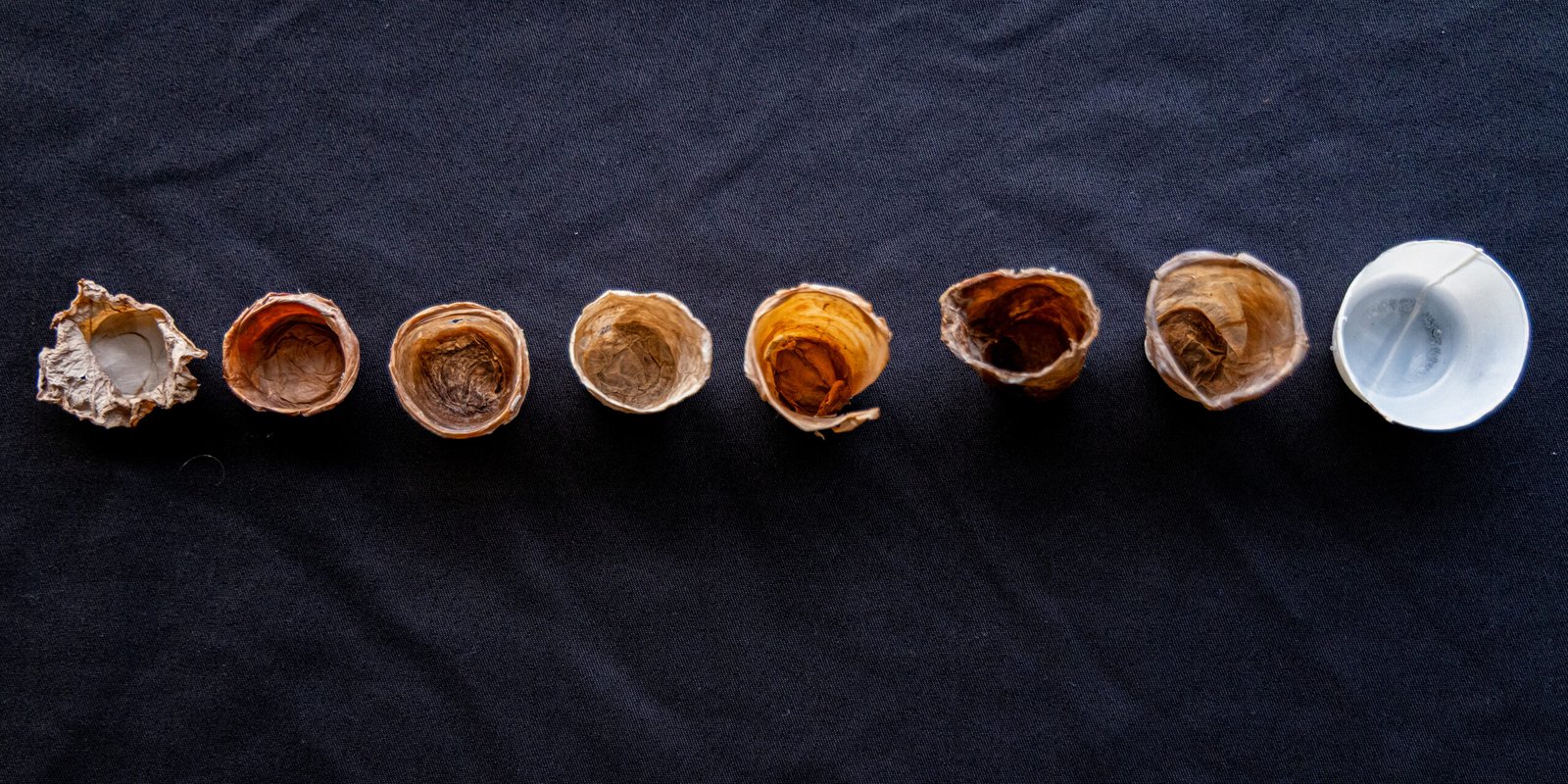
After use, the product fully decomposes within 90 days in natural conditions. No industrial composting needed.
Decomposed material enriches soil as compost, growing new crops that produce new agricultural waste streams.
Bacterial cellulose is chemically pure β-1→4-glucan, composed of 99% carbon and oxygen. It requires no chemical coatings for water resistance and contains no fluorinated compounds. Because it is a biopolymer, not a synthetic plastic, it cannot shed microplastics.
Abol-Fotouh, D., et al. (2022). Bacterial cellulose: Sustainable solution to water-polluting microplastics. doi:10.1016/j.watres.2022.118952
Bacterial cellulose is readily degraded by soil microorganisms. Peer-reviewed studies document progressive biodegradation with visible surface breakdown within 30 days and advanced structural degradation by 90 days. No industrial composting required. Internal testing by Plastilose confirms full decomposition of our 3D products within 90 days under natural soil conditions.
Barretto, H. C. M., et al. (2023). Biodegradability of bacterial cellulose polymer below the soil. Polymer Degradation and Stability, 214, 110382. doi:10.1016/j.polymdegradstab.2023.110382
Based on Plastilose's internal cradle-to-gate life cycle assessment, comparing our bacterial cellulose production process (low-temperature fermentation at 30 °C on agricultural waste streams) to conventional polypropylene disposable manufacturing. Published LCA literature reports bioplastics achieving 7–74% lower CO₂ emissions than conventional plastics. Our high reduction reflects the use of waste-based feedstock and minimal energy input.
Internal Plastilose LCA estimate. Supported by: Rosenboom, J. G., et al. (2022). Bioplastics for a circular economy. Nature Reviews Materials, 7, 117–137. doi:10.1038/s41578-021-00407-8
Plastilose has filed a patent for its post-processing technology that transforms flat bacterial cellulose sheets into functional three-dimensional products such as medicine cups. This proprietary forming process preserves the material's mechanical and barrier properties while enabling mass production of complex shapes. Patent application filed 2026.
Starting where it matters most.
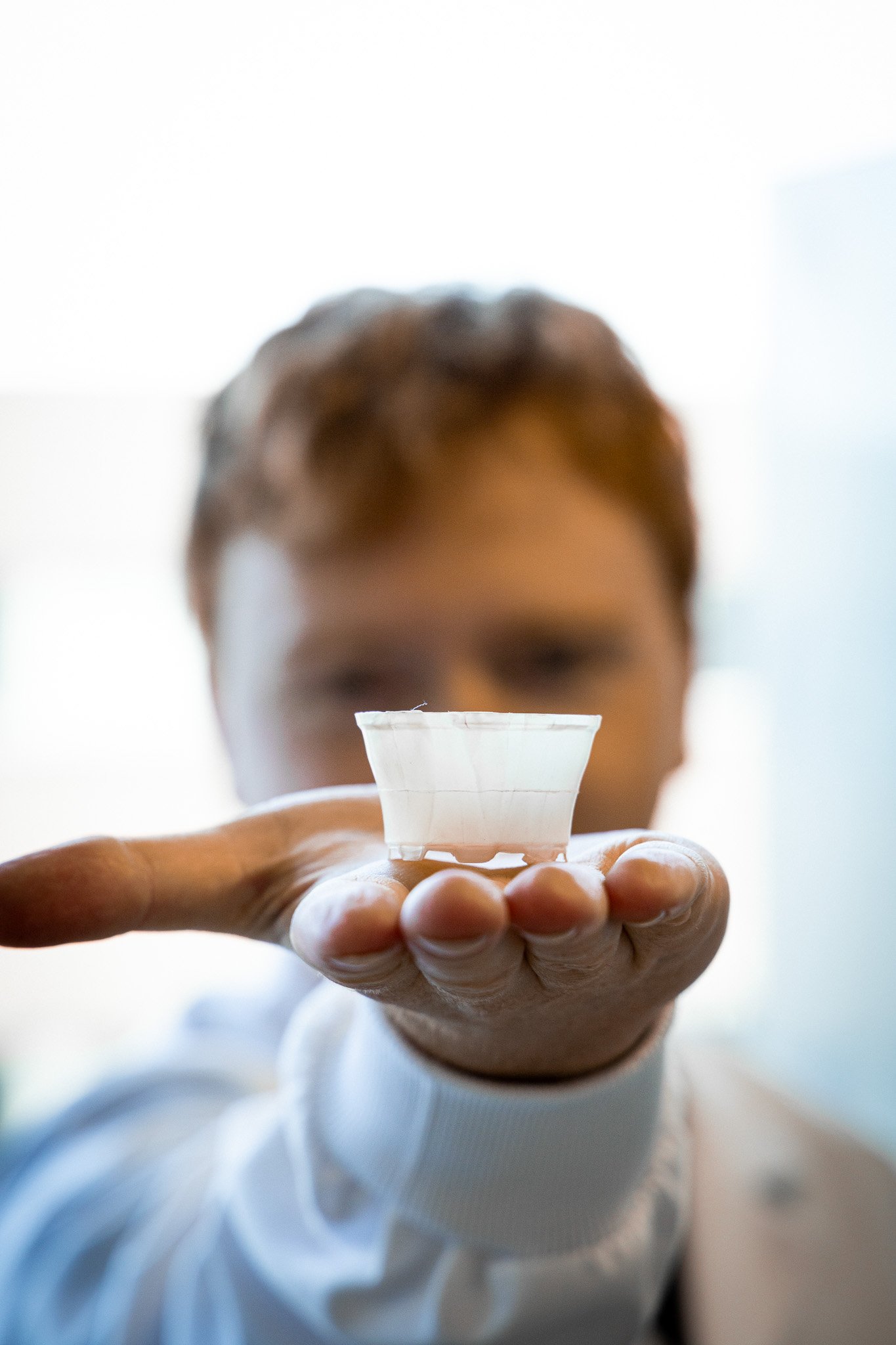
Our first product: the 30ml medical dosing cup, used 50 million times per year in the Netherlands alone. 12+ billion globally. No sustainable alternative exists. Until now.
- Drop-in compatible with existing hospital workflows
- Co-designed with hospital partners
- MDR regulatory pathway identified
- ISO 13485 roadmap in development
"We know plastic is the problem. But nobody has given us something that actually works."
— Hospital procurement manager
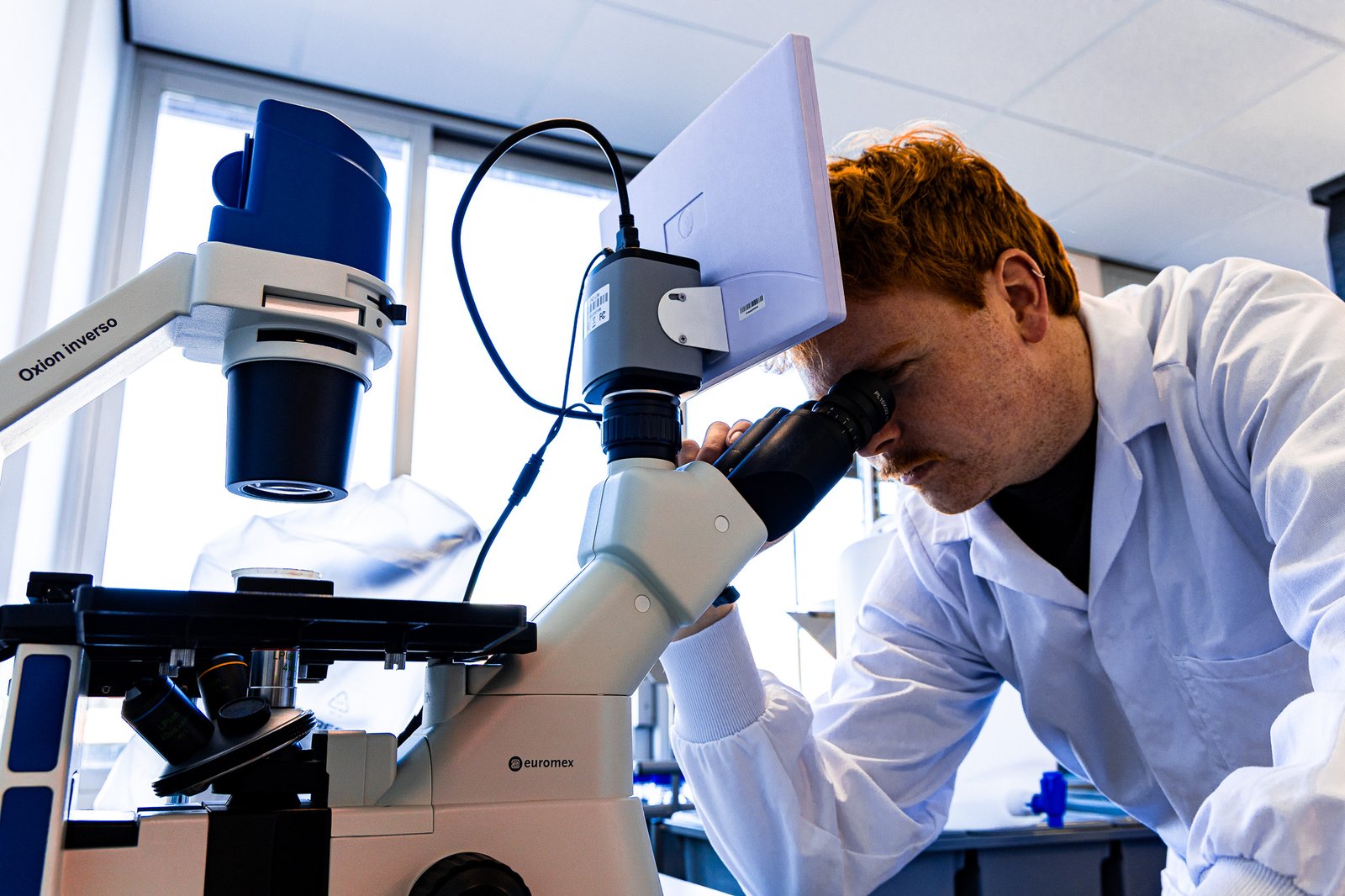
Built on science. Engineered to scale.
Komagataeibacter bacteria convert simple sugars into pure cellulose nanofibers at 30 °C. Published studies demonstrate successful production from corncob hydrolysate, sugarcane bagasse, waste figs, and fruit processing waste, with yields up to 20.6 g/L on orange juice substrate.
Plastilose uses agricultural rest streams from Dutch farmers and food industry partners, converting a waste problem into a feedstock pipeline. Our fermentation process is optimized for consistency and scalability.
Liu, K., et al. (2025). Efficient production of bacterial cellulose using Komagataeibacter sucrofermentans on sustainable feedstocks. ChemSusChem. doi:10.1002/cssc.202401578
Bacterial cellulose has a tensile strength of 200–300 MPa and a Young's modulus up to 114 GPa in monofilament form, with crystallinity of 84–89%. Its dense nanofibril network (fiber diameter 20–100 nm) gives it exceptional strength-to-weight performance.
Plastilose's proprietary post-processing preserves these properties in the final 3D product form. Internal testing confirms our medicine cups match the structural rigidity and flexibility of conventional polypropylene disposables.
Gomes, F. P., et al. (2022). Bacterial cellulose: A remarkable polymer as a source for biomaterials tailoring. Materials, 15(3), 1100. doi:10.3390/ma15031100
Plastilose's post-processing achieves water and grease resistance through the material's dense nanofibril structure and our proprietary treatment, not through chemical coatings or fluorinated compounds. The result is a barrier performance suitable for liquid-holding medical disposables, entirely free of PFAS.
Published research shows bacterial cellulose films can achieve water vapor permeability reductions of up to 84% through structural modification alone, without synthetic additives.
Internal Plastilose R&D. Supported by: Yu, S., et al. (2024). Development of strong and high-barrier food packaging films from modified bacterial cellulose. RSC Sustainability. doi:10.1039/D3SU00219E
Bacterial cellulose is readily broken down by naturally occurring soil microorganisms. Published research documents visible surface degradation within 30 days, advanced structural breakdown by 90 days, and approximately 75% mass loss within 8 weeks under soil burial conditions.
Unlike many bioplastics that require industrial composting at elevated temperatures, bacterial cellulose degrades in ordinary soil, garden compost, and natural environments. Internal Plastilose testing confirms complete decomposition of our 3D products within 90 days.
Barretto, H. C. M., et al. (2023). Biodegradability of bacterial cellulose polymer below the soil. Polymer Degradation and Stability, 214, 110382. doi:10.1016/j.polymdegradstab.2023.110382
Patent-pending post-processing technology for 3D cellulose forming.
Read our technology overviewSupported by




Five engineers. One mission.
We argue, we disagree, we push each other, because we trust each other enough to be honest. That is what it takes if we are going to change this material industry.

Joram Boumans
Founder & CEO
- Business & fundraising
- Industrial product design
- Brand & growth
- Education
- MSc Integrated Product Design, TU Delft
- Experience
- 10+ years building digital products and brands through his agency tridim
- Notable
- 3rd place GSEA Dutch Student Entrepreneur finals.

Jason Smit
Founder & CTO
- Biodesign & material engineering
- Product development
- Hospital workflow integration
- Education
- MSc Integrated Product Design, TU Delft
- Experience
- Designed the original Plastilose straw at the BlueCity Circular Ideation Lab. Worked in hospital with direct access to relevant environment.
- Notable
- Directly embedded in hospital operations, bridging product design and clinical workflows.

Pim Jansen
COO
- Operations & project delivery
- Process optimization
- Infrastructure scaling
- Education
- MSc Embedded Systems, TU Delft. MSc Business Administration, Erasmus University Rotterdam.
- Experience
- Project coordinator at Stedin, managing energy infrastructure rollouts across the Netherlands.
- Notable
- Dual master's combining deep technical understanding with business operations.
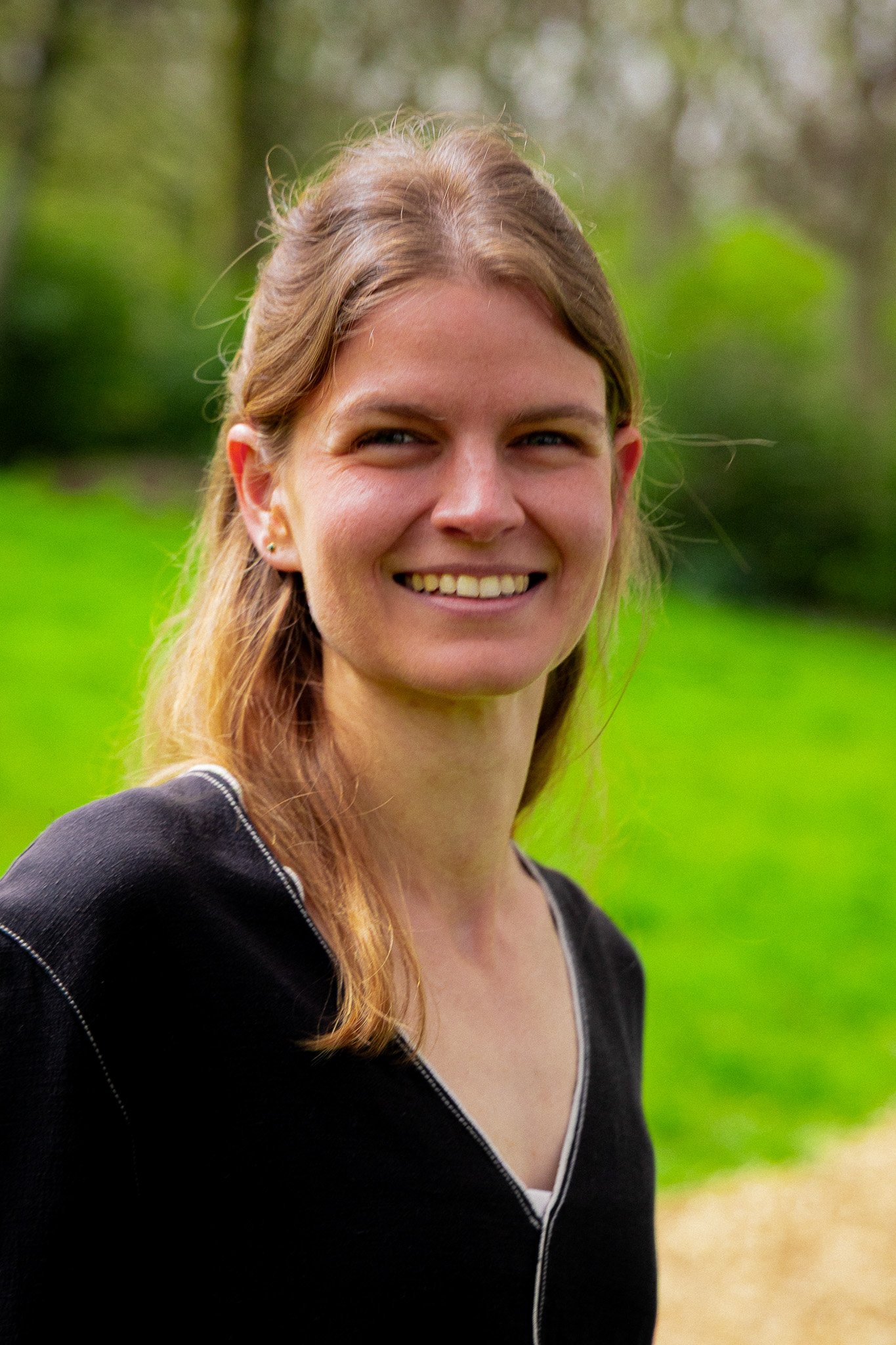
Ellen Shute
Microbiologist
- Microbiology & fermentation
- Bioinformatics & data analysis
- Bio engineering
- Education
- MSc Molecular Techniques in Life Science, KTH Stockholm & SciLifeLab. BSc Utrecht University, Summa Cum Laude.
- Experience
- Bioinformatician at Utrecht University. Research intern at SciLifeLab Stockholm.
- Notable
- Published in Trends in Genetics. iGEM Stockholm project lead, gold medal.

Iza Bosch
Product Engineer
- Product engineering & prototyping
- 3D printing & fabrication
- Detail design & testing
- Education
- MSc Integrated Product Design, TU Delft
- Experience
- Design Engineer at Project MARCH (TU Delft Dream Team), responsible for exoskeleton housing design. Teaching assistant for 3D Printing for Repair and Prototyping for/with Emerging Materials at TU Delft.
- Notable
- Hands-on specialist who turns ideas into physical products — from prototype to production.