Healthcare
Replacing plastic where it matters most. Starting with the medicine cup.
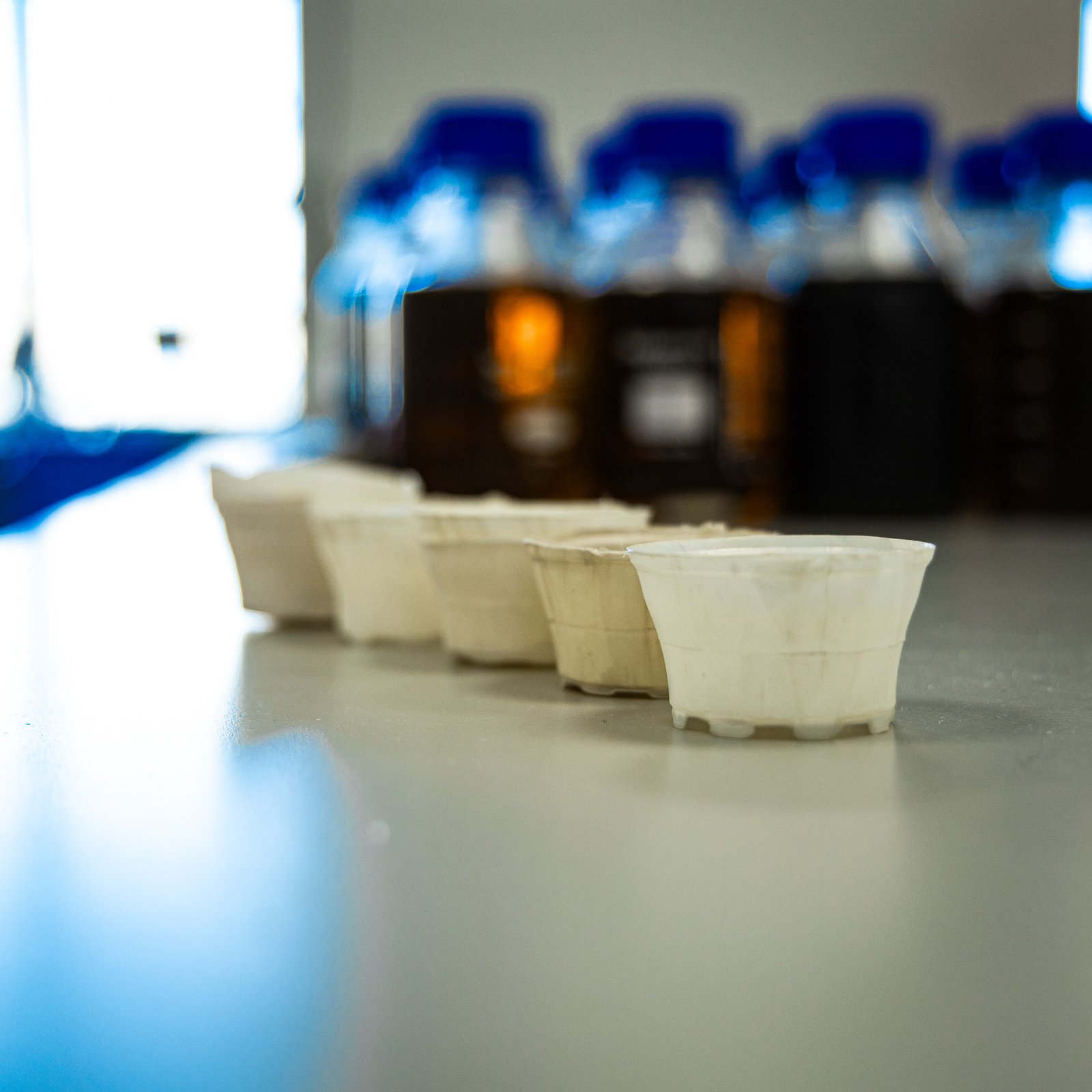
50 million cups per year in the Netherlands. 12 billion globally. All incinerated after a single use. Plastilose is the first bacterial cellulose cup to pass drug interaction testing.
300,000 cups per hospital. Every one of them incinerated.
European healthcare systems generated over 900,000 tonnes of single-use plastic in 2023. In surgical settings, disposables account for 86% of medical consumables by weight. Medicine cups are among the most frequently discarded items, used multiple times per day per patient across every ward.
Systemiq & Eunomia. (2024). A prescription for change: Rethinking plastics use in healthcare. Health Care Without Harm Europe
The Green Deal Healthcare in the Netherlands commits hospitals to 55% CO₂ reduction by 2030, with full climate neutrality by 2050. The EU Corporate Sustainability Reporting Directive (CSRD) now requires large hospitals to quantify and report Scope 3 emissions, including disposable procurement. Without material alternatives, these targets remain out of reach.
Systemiq & Eunomia. (2024). A prescription for change. Health Care Without Harm Europe
Every alternative has been tried. None of them work.
Polypropylene medicine cups are petroleum-derived, single-use, and classified as clinical waste. They cannot be recycled through standard hospital waste streams because of medication contamination. Every cup is incinerated, releasing CO₂ and contributing to the hospital's Scope 3 emissions.
PP sheds microplastics during use and incineration. The EU Packaging and Packaging Waste Regulation (PPWR) is tightening requirements on single-use plastics in institutional settings. Under CSRD, hospitals must now report emissions from disposable procurement. PP cups are becoming a regulatory liability, not just an environmental one.
Rizan, C., et al. (2020). Plastics in healthcare: Time for a re-evaluation. Journal of the Royal Society of Medicine, 113(2), 49-53. doi:10.1177/0141076819890554
Uncoated paper cannot hold liquid for more than a few minutes before softening and leaking. To solve this, manufacturers apply per- and polyfluoroalkyl substance (PFAS) coatings for water and grease resistance. A systematic review identified 68 different PFAS compounds in paper food contact materials, with paper and board accounting for 72.5% of all PFAS-related entries.
Products marketed as "PFAS-free" often contain replacement fluorinated compounds with similar toxicity profiles. Paper fiber surfaces also trap crushed medication particles, creating unpredictable drug loss. For liquid medication rounds, paper cups cannot maintain structural integrity through the full dispensing cycle. They fail the most basic requirement: reliability.
Phelps, D. W., et al. (2024). Environmental Science & Technology, 58(14), 6161-6175. doi:10.1021/acs.est.3c03702
Re-usable medicine cups require validated washing cycles (thermal disinfection or autoclave), individual tracking per cup, and strict protocols to prevent cross-contamination between patients. Each cup must be collected from bedside, transported to a central sterilization unit, processed, dried, inspected, and redistributed. For a hospital dispensing medication to hundreds of patients per day, that creates a parallel logistics chain that competes for the same resources already under pressure.
Infection control departments in most Dutch hospitals classify medicine cups as single-patient items. Drug residue, patient-specific contamination, and the risk of incomplete cleaning make re-use a liability. The water and energy costs of industrial-grade washing further erode the environmental benefit. Studies on re-usable medical items consistently show that the break-even point versus single-use depends on achieving high re-use cycles, something medication cups rarely reach before damage, loss, or protocol-driven disposal.
Rizan, C., et al. (2020). Journal of the Royal Society of Medicine, 113(2), 49-53. doi:10.1177/0141076819890554
"We know plastic is the problem. But nobody has given us something that actually works."
Hospital procurement manager

The product
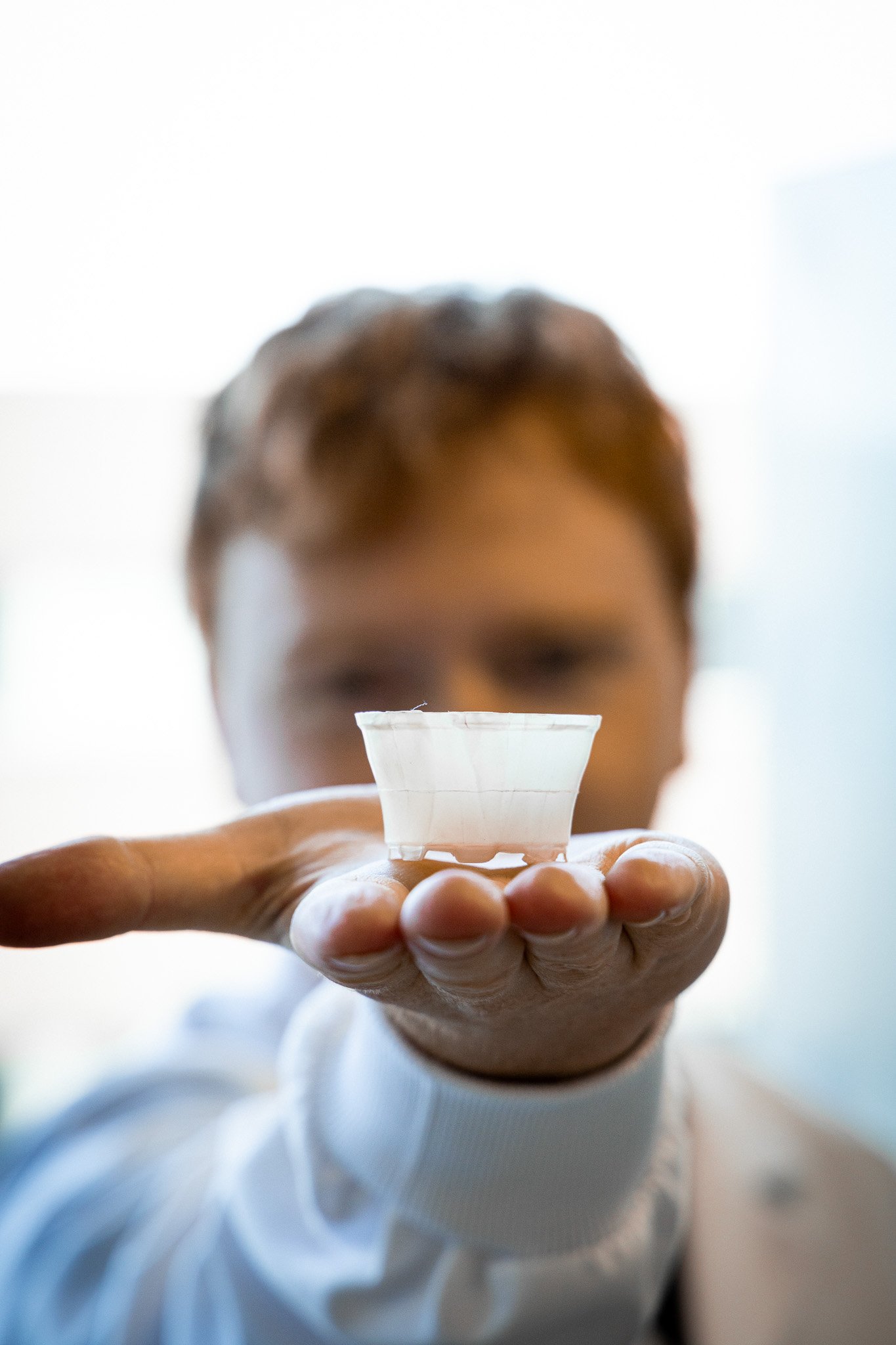
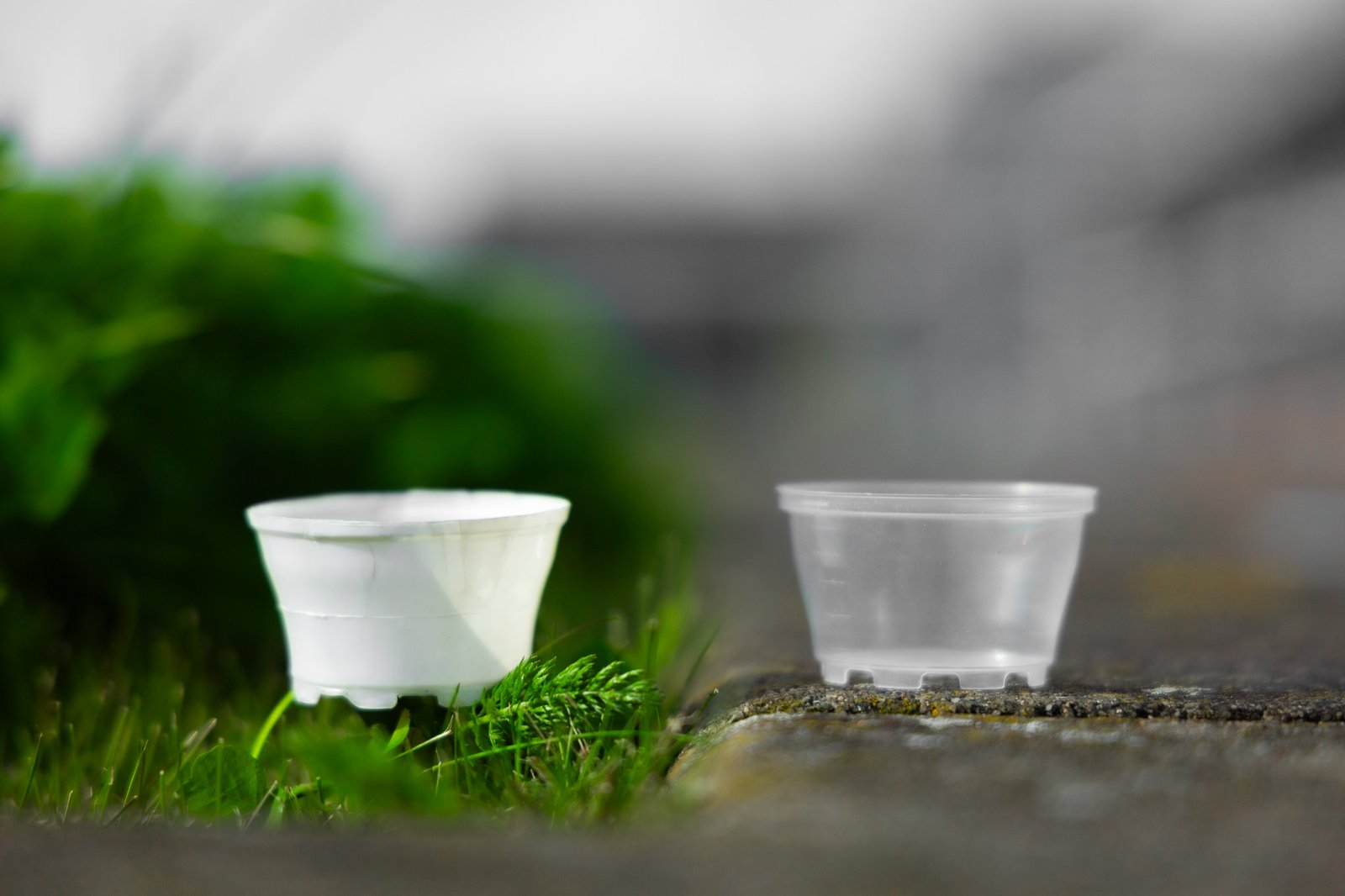
The 30ml dosing cup. Grown from bacterial cellulose.
A drop-in replacement for the standard polypropylene medicine cup. Same dimensions, same workflow. The only difference is the material, and what happens after use.
- Same dimensions as the standard PP cup
- Holds liquids without leaking or softening
- Suitable for tablets, capsules, crushed, and liquid medication
- Compatible with all standard sterilization methods
- Fully decomposes in 90 days, no industrial composting required
Tablets
No adhesion, clean release from cup surface
Capsules
No chemical interaction with gelatin coatings
Liquids
Hydrophilic surface, >90% drug release in 30 min
Crushed
Minimal particle adhesion, low residual drug loss
Safety evidence
The data your quality team needs.
Based on published peer-reviewed evidence and our internal safety dossier. Product-specific validation is ongoing with hospital partners. Click any card for full data.
FTIR spectroscopy confirms no chemical interaction between bacterial cellulose and ibuprofen or propranolol HCl. Drug molecules adsorb to the cellulose surface through physical hydrogen bonding only. This interaction is fully reversible upon contact with aqueous media, meaning the drug releases completely from the cup surface.
- Cellulose purity
- >99% β-1,4-glucan
- Chemical reactivity
- None detected (FTIR)
- Extractables
- Below detection limits
- Interaction type
- Physical (H-bonding), reversible
Jantarat, C., et al. (2021). RSC Advances, 11(59). doi:10.1039/d1ra07761a
Bacterial cellulose received FDA GRAS acceptance on April 13, 1992. Oral toxicity studies report a No Observed Adverse Effect Level (NOAEL) exceeding 5,000 mg/kg/day. Multiple peer-reviewed studies confirm non-cytotoxicity in cell culture and in vivo biocompatibility. BC-based wound dressings (Bionext, XCell, Membracell) are already commercially available as medical devices.
- FDA status
- GRAS (April 13, 1992)
- Oral NOAEL
- >5,000 mg/kg/day
- Cytotoxicity
- Non-cytotoxic
- Existing BC devices
- Bionext, XCell, Membracell
Girard, A., et al. (2024). JBMR-B, 112(10). doi:10.1002/jbm.b.35488
Helenius, G., et al. (2006). JBMR-A, 76(2). doi:10.1002/jbm.a.30570
Bacterial cellulose has a water contact angle of 38-47 degrees, making the surface hydrophilic. This minimizes drug adhesion and ensures rapid, complete release when the cup contacts liquid. Testing with ibuprofen and propranolol HCl confirms >90% drug recovery within 30 minutes.
- Contact angle
- 38-47°
- Drug release (30 min)
- >90%
- Surface character
- Hydrophilic
- Adhesion mechanism
- Minimal, physical only
Jantarat, C., et al. (2021). RSC Advances, 11(59). doi:10.1039/d1ra07761a
Bacterial cellulose maintains structural integrity across all standard sterilization protocols. The high crystallinity (84-89%) and thermal stability of BC provide resilience under elevated temperatures and radiation exposure.
- Autoclave (steam)
- Compatible
- Gamma irradiation
- Compatible
- Ethylene oxide (EtO)
- Compatible
- Electron beam (e-beam)
- Compatible
Girard, A., et al. (2024). JBMR-B, 112(10). doi:10.1002/jbm.b.35488
Published studies report bacterial cellulose tensile strength of 200-300 MPa, significantly exceeding polypropylene (30-40 MPa). Product-specific mechanical testing is ongoing with our hospital partners to validate performance under real clinical conditions. The nanofibril network provides high structural integrity, preventing cracking, splitting, or deformation during handling and medication dispensing.
- BC tensile strength
- 200-300 MPa (literature)
- PP tensile strength
- 30-40 MPa
- Young's modulus (BC)
- Up to 114 GPa
Gomes, F. P., et al. (2022). Materials, 15(3), 1100. doi:10.3390/ma15031100
Want the full dataset? We'll walk you through the evidence in 30 minutes.
Schedule an intake callPerformance comparison
How it compares to what you use today.
| Property | Plastilose BC | Polypropylene (PP) | Paper cup | Re-usable cup |
|---|---|---|---|---|
| Material source | Bacterial fermentation | Petroleum | Wood pulp + coating | Steel or melamine |
| Liquid integrity | Holds indefinitely | Holds indefinitely | Softens in minutes | Holds indefinitely |
| Drug interaction | None (FTIR confirmed) | Inert | PFAS migration risk | Inert (steel) |
| PFAS content | 0% | 0% | Present (coatings) | 0% |
| Microplastics | None | Yes | From coatings | None |
| End of life | 90-day decomposition | Incineration | Compost (if uncoated) | Re-wash cycle |
| Cross-contamination | Zero (single-use) | Zero (single-use) | Zero (single-use) | Risk per wash cycle |
| CO₂ vs PP baseline | 96% lower | Baseline | ~30% lower | Depends on wash cycles |
Material source
Liquid integrity
Drug interaction
PFAS content
End of life
Cross-contamination
CO₂ vs PP baseline
Co-design
Built with hospitals, not just for them.
The right regulatory pathway for a new material in healthcare is not something you figure out in a lab. It requires real-world data from real wards. That is why we co-develop with hospital partners from day one.
Bacterial cellulose already has strong regulatory precedent. BC-based wound dressings are CE-marked and FDA-cleared. Our medicine cup builds on that foundation, but we are not cutting corners on validation.
We work directly with pharmacy, nursing, quality, and sustainability teams inside our partner hospitals. Together we gather the clinical integration data, workflow feedback, and performance evidence needed to define the right certification pathway.
- BC wound dressings already CE-marked (Bionext, XCell)
- FDA GRAS since 1992
- Safety evidence dossier compiled from peer-reviewed literature
- Product-specific validation ongoing with hospital partners
- Regulatory pathway shaped by real clinical integration data
How we co-design
We sit with pharmacy and nursing teams to understand the exact workflow, ward conditions, and pain points around current cups.
Cups are evaluated on the ward under real conditions. We collect structured feedback on handling, liquid integrity, medication types, and workflow fit.
We quantify waste reduction, CO₂ impact, and user satisfaction. This data feeds both the hospital's sustainability reporting and our regulatory file.
Clinical integration data from pilot partners directly informs the certification pathway. The right standards, validated by real-world evidence.
Reporting value
One pilot, four reports covered.
Sustainability targets only count when you can document them. A single Plastilose pilot generates auditable data for every framework your hospital reports against.
Green Deal Healthcare
Dutch hospitals committed to 55% CO₂ reduction by 2030. Switching 300,000 cups from PP to BC is a documented Scope 3 reduction you can report in year one.
96% lower CO₂ per cup vs PPCSRD / Scope 3 reporting
Large hospitals must now quantify and disclose emissions from disposable procurement. Each Plastilose cup carries a verifiable carbon footprint, ready for your Scope 3 disclosure.
Quantifiable per unit, auditable from pilotPPWR compliance
The EU Packaging and Packaging Waste Regulation tightens requirements on single-use plastics in institutional settings. A bio-based, biodegradable cup positions your procurement ahead of the regulation curve.
0% fossil plastic, 90-day decompositionPFAS elimination
PFAS regulations are accelerating across the EU. Paper cup alternatives rely on fluorinated coatings. Plastilose is pure cellulose, with zero PFAS and zero microplastic shedding.
0% PFAS, 0% microplasticsWe work with a small number of hospital partners to generate this data together. If your hospital is serious about reducing disposable plastic, we would like to hear from you.
We are looking for the right partners.
Plastilose is not a product you order from a catalogue. We are building something new, and we need hospital partners who are willing to invest in innovation alongside us. Not every hospital is the right fit, and that is intentional.
Internal champions
A sustainability officer, pharmacy lead, or procurement manager who can drive the project internally. Innovation needs someone on the inside who believes in it.
Willingness to co-develop
We are not delivering a finished product and walking away. We need partners who can provide feedback, share ward-level data, and iterate with us on form, workflow, and integration.
Concrete sustainability mandate
Hospitals with active Green Deal commitments, CSRD reporting obligations, or board-level plastic reduction targets. The urgency needs to be real, not aspirational.
If this sounds like your hospital, let's talk. We will be honest about where we are in development, and we expect the same from you.
Currently selecting partners in the Netherlands.